Sound Like a City That Glows: The Podcast Designers Painting Neon With Pure Audio
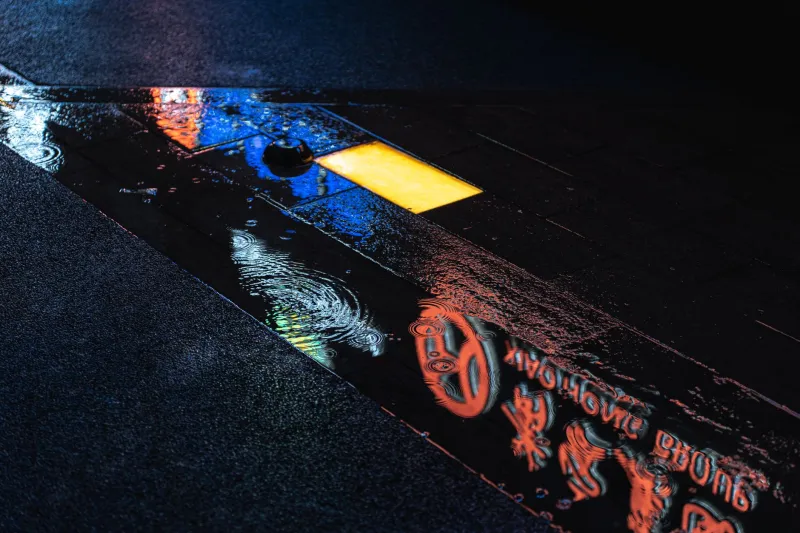
Close your eyes. You're walking through a city that doesn't technically exist. Somewhere above you, a busted sign flickers — you can hear it, that low electric stutter. Rain taps against concrete. A synthesizer hums underneath everything like the city itself has a heartbeat. You haven't seen a single image, but you know exactly what this place looks like.
That's not an accident. That's craft.
Across the US, a quietly radical community of audio directors, sound designers, and independent podcast studios is doing something genuinely strange and exciting: building sonic environments that evoke neon-futurist aesthetics as deliberately and precisely as any concept artist laying down color in Photoshop. They're working in a medium with zero visuals, and somehow they're making you see.
The Visual Grammar of Sound
For most of podcast history, sound design meant music beds and maybe some ambient noise to signal "we're outside now." Functional stuff. But the designers pushing into neon and cyberpunk territory are thinking about audio the way cinematographers think about light — as a tool for shaping emotional space and visual imagination.
Take the approach being developed at studios like Portland-based Hollow Signal Audio, where creative director Mara Voss has spent the last three years building what she calls "chromatic soundscapes" for narrative fiction podcasts. "Every frequency choice is a color choice," she explains. "A high, clean synth note reads as cold blue light. A warm, slightly distorted bass hum feels like amber or orange. When we layer them, listeners start building a palette in their heads without realizing it."
Voss and her collaborators are drawing from a surprisingly wide range of references — 1980s Japanese city-pop production, the ambient works of Brian Eno, Vangelis's Blade Runner score, and even the incidental music from early video game RPGs. The goal isn't nostalgia, though. It's using that retro-futurist sonic vocabulary to signal something specific: this world is electric, it's a little dangerous, and it glows.
Rain as a Design Element
If there's one sound that keeps showing up in neon-coded podcast production, it's rain. Not just any rain — very specific rain. The kind that bounces off asphalt, pools under streetlights, and turns every city block into a reflection of itself.
Audio director Jerome Castillo, who produces out of Chicago, has become something of an obsessive on the subject. His studio maintains a library of over 400 distinct rain recordings, catalogued not just by intensity but by surface texture and acoustic environment. "Rain on a glass skyscraper sounds nothing like rain on a 1970s brick building," he says. "And those two sounds put a listener in completely different worlds. One feels corporate and cold. The other feels lived-in, a little worn, like the city has been around long enough to have secrets."
Castillo's recent work on the noir-adjacent fiction podcast Copper Static — which follows a private investigator in a near-future Detroit — has drawn attention from both the podcast community and, unexpectedly, digital artists who've started reaching out about collaboration. Several visual creators have told him the show's audio inspired direct design work: color palettes, character concepts, even architectural sketches of the world they heard but never saw.
That feedback loop between audio designers and visual artists is becoming one of the more fascinating dynamics in this space.
When Digital Artists Start Listening
The crossover appeal makes a certain kind of sense. Neon aesthetics have always lived at the intersection of multiple creative disciplines — graphic design, photography, architecture, fashion. Audio is just the latest medium getting pulled into that orbit.
New York-based digital illustrator Keisha Odom started listening to neon-coded podcasts as background material while she worked, and ended up doing something more deliberate. "I'd listen to an episode and then immediately sketch what I'd just heard," she says. "Not illustrating the plot — illustrating the feel of it. The sound design was giving me a full visual brief without any actual images."
Odom has since collaborated directly with two podcast studios, contributing visual assets for show branding and episode artwork. But she says the more interesting collaboration happens informally, in online communities where sound designers and digital artists trade references, mood boards, and feedback on each other's work. Discord servers and niche subreddits have quietly become creative development spaces where the audio and visual sides of neon culture are in active conversation.
The Flicker Effect
One of the signature techniques in neon-coded sound design is what some designers are calling "the flicker" — a subtle, rhythmic interruption in an otherwise steady tone or ambient layer that mimics the behavior of aging neon signs. It's almost subliminal, but listeners consistently report that it creates a specific sense of place and time.
San Francisco-based audio producer Dana Leigh, who works primarily on anthology horror podcasts with a retro-futurist bent, has built entire sonic identities around this technique. "A perfectly clean, steady hum feels modern and sterile," she explains. "Add a little irregularity — a slight waver, a brief dropout — and suddenly it feels like something that's been running for decades. It has history. It has wear. That's the texture of a neon world."
Leigh is deliberate about not over-explaining the technique to listeners. Part of the power, she argues, is that people feel it without consciously processing it. The flicker does its work quietly, the same way a great production designer's choices in a film often go unnoticed by audiences while shaping their entire emotional experience.
Building an Audience That Gets It
What's particularly interesting about this niche is the audience it's attracting. Podcast analytics are notoriously limited, but designers in this space consistently describe a listener base that skews toward people already embedded in neon and futurist creative culture — digital artists, game designers, cyberpunk fiction readers, people who spend time in aesthetic communities on Tumblr, TikTok, and Instagram.
These listeners aren't passive. They make fan art. They build Spotify playlists that try to recreate the show's atmosphere. They discuss sound design choices in forums with the same level of technical engagement you'd find in a cinematography discussion board.
"Our listeners treat the audio like a visual medium," says Mara Voss. "They notice when we change the reverb profile between seasons. They notice when a character's sonic environment shifts. They're reading the sound design the way you'd read color grading in a film."
That level of engagement is what's convincing more independent studios to invest seriously in neon-coded sound design rather than treating it as a nice-to-have. The audience is there, it's passionate, and it responds to craft.
The Medium as the Message
There's something almost poetic about the fact that neon aesthetics — which are fundamentally about visible light — are finding such a natural home in a medium defined by its invisibility. But maybe that's exactly why it works. Neon has always been about the suggestion of something: the glow around a sign rather than the sign itself, the reflection in a puddle rather than the source.
Sound design operates the same way. It suggests. It implies. It builds a world in the gap between what's given and what the listener's imagination fills in.
The American podcast designers working in this space aren't just building shows. They're building cities — electric, rain-soaked, flickering cities that exist entirely in the space between your ears. And somehow, you can see every light.