Frequencies in the Dark: The American Producers Sculpting Synth Soundscapes You Can Almost See
Close your eyes and hit play on the right synthwave track, and something strange happens. You don't just hear the music — you see it. Rain-slicked streets bleed purple under a tower of flickering signs. A highway stretches into a horizon lit by something between sunset and reactor glow. That's not an accident. A generation of American music producers is working overtime to make sure the visual experience lives entirely inside the sound.
This is neon noir for your ears, and it's one of the most quietly fascinating aesthetic movements happening in US music right now.
Sound as Set Design
The connection between electronic music and visual culture isn't new. Kraftwerk were building imaginary cities out of synthesizers in the 1970s. But what's happening across studios in Los Angeles, Chicago, Atlanta, and Brooklyn right now feels different in scope and intention. Producers aren't just borrowing the retro-futurist aesthetic for a mood board — they're treating sonic architecture the way a production designer treats a film set.
Every frequency choice becomes a lighting decision. A washed-out, reverb-heavy pad sits in the mix the way a fog machine fills a back alley. A sharp, punchy arpeggio cuts through like the flash of a neon sign catching wet pavement. Producers talk about their process in visual terms almost instinctively, describing basslines as "the low amber glow under a bridge" or a synth lead as "that cold blue you get from a parking structure at 2 a.m."
It's a language that's spreading fast through the US electronic underground, and it's reshaping what audiences expect from the genre.
The Architects Behind the Glow
Out of Los Angeles, producers like Gunship collaborator and solo artist Timecop1983 — who has built a dedicated American fanbase through Spotify-driven ambient synthwave — represent one end of the spectrum: lush, cinematic, designed to feel like a film score for a movie that doesn't exist yet. His tracks drift through neon-lit melancholy with the patience of someone who genuinely wants you to inhabit the world he's constructing.
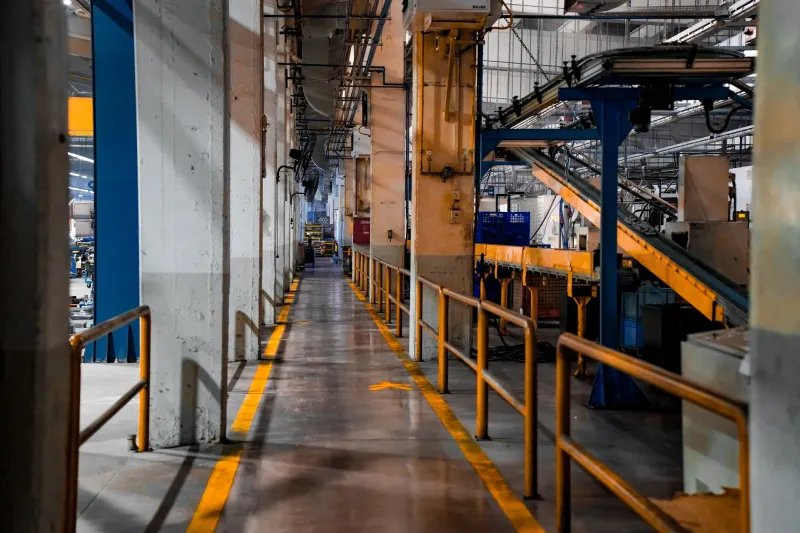
On the harder, more industrial end, Chicago-based acts working in the darker corners of darksynth and cyberpunk electronica push the aesthetic toward something more confrontational. The sonic palette here borrows from the grittier side of neon culture — the flickering sign that's half-dead, the alley that smells like rain and rust. Distorted leads and machine-drum patterns build cities you wouldn't necessarily want to visit, but can't stop imagining.
Then there are producers like LA-based Makeup and Vanity Set, whose releases have long sat at the intersection of film scoring and electronic experimentation. His approach to layering synthesizers mimics the way a cinematographer layers practical lighting — building depth, shadow, and sudden bursts of color that feel earned rather than decorative.
What connects all of them is intentionality. These aren't producers stumbling into a vibe. They're architects.
Cover Art Is Part of the Blueprint
You can't talk about this movement without talking about the visual identity that wraps around the music. Album artwork in the synthwave and neon-adjacent electronic space has become its own design discipline — and American producers are increasingly treating the sleeve as an extension of the sonic world, not just packaging.
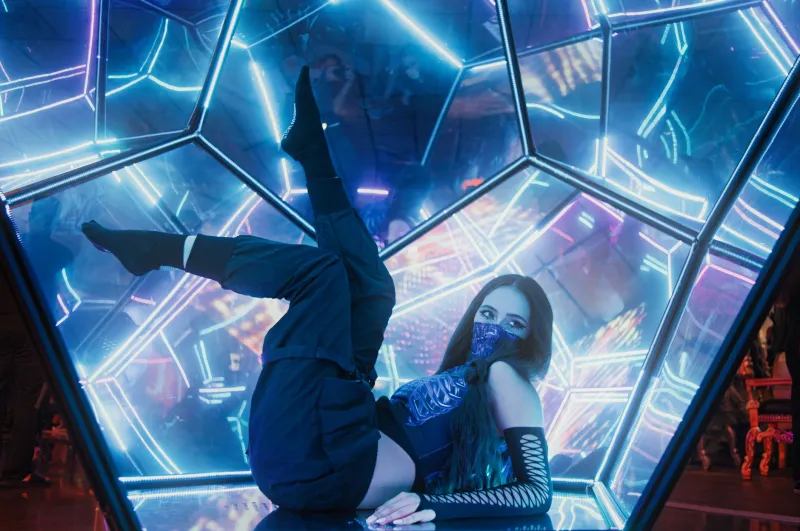
The aesthetic vocabulary is consistent and deliberate: retrograde typography, grid-based cityscapes, figures silhouetted against electric color fields, chrome textures, and color palettes that swing between deep violet and overdriven magenta. These aren't random aesthetic choices. They're breadcrumbs, priming the listener's visual imagination before the first note plays.
Some producers go further, commissioning digital artists to build entire visual universes around an album cycle — concept art, animated loops, world-building documents that never get published but inform every creative decision. The music video, when it exists, is just the most visible layer of a much deeper visual project.
Live Shows as Total Environments
The logical endpoint of all this sonic and visual architecture is the live experience — and US producers in this space are pushing hard to make their shows feel less like concerts and more like environmental installations.
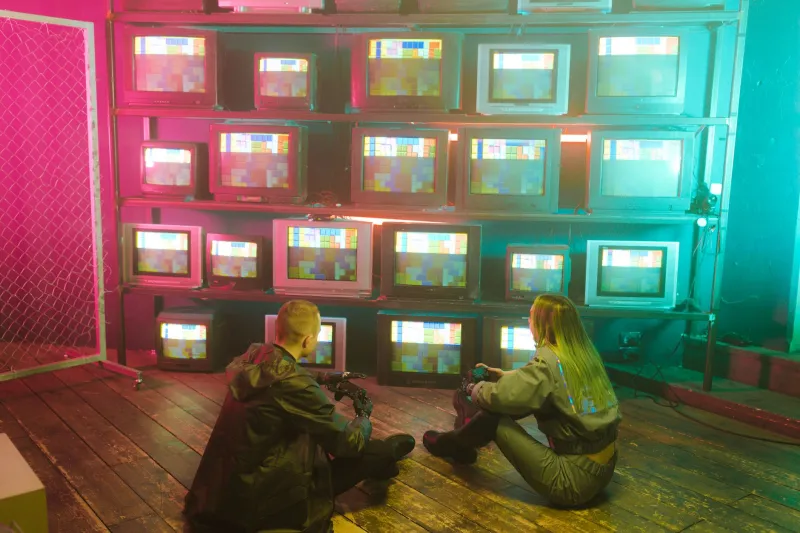
LED walls running custom-designed visuals synced to live performance have become the baseline. But more ambitious acts are moving toward full projection mapping, fog systems calibrated to the sonic texture of specific tracks, and lighting rigs designed in direct conversation with the music's frequency content. The idea is simple: if the album was built to evoke a place, the live show should actually put you there.
Festivals like Synthwave Nights events popping up across US cities, and dedicated genre showcases in venues from Portland to Miami, are giving these producers the infrastructure to go bigger. Audiences are showing up specifically for the totality of the experience — the sound and the light as one inseparable thing.
Painting With Frequency
When you ask these producers about their process, the phrase that comes up again and again is "painting with frequency." It's a useful metaphor because it captures something real about how they work. A synth pad isn't just a chord — it's a color temperature. A kick drum isn't just a beat — it's the weight of a footstep on wet concrete. Reverb isn't just space — it's the distance between you and the next streetlight.
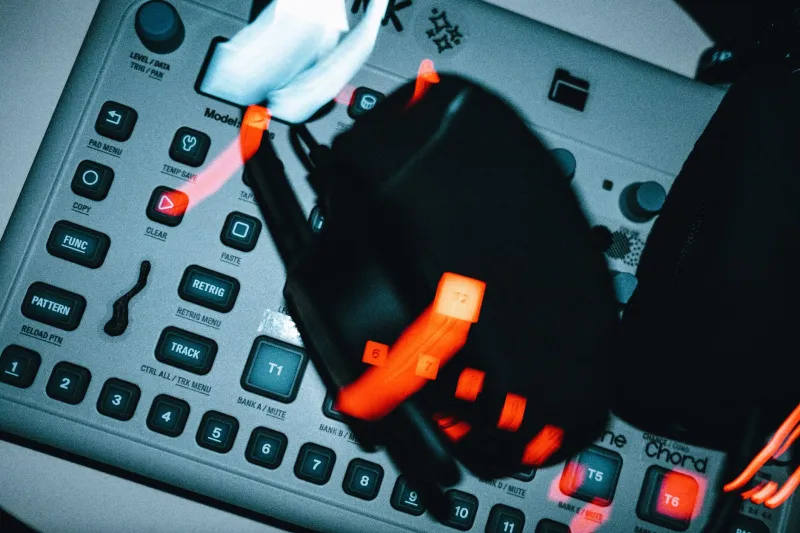
This kind of thinking demands a different relationship with production tools. These producers spend enormous amounts of time in the low-level details of sound design, crafting custom patches and processing chains that give their textures a specific visual quality. They're not reaching for presets. They're building from raw material, the same way a painter mixes pigment rather than buying a tube of something close enough.
The result is music that rewards close listening in a way that a lot of electronic production doesn't. There are layers designed to be felt before they're heard, details that only surface through headphones at midnight, choices that make more sense on the fifth listen than the first.
Why It Matters Right Now
American audiences are consuming electronic music in more fragmented ways than ever — playlists, algorithm-driven discovery, background listening while scrolling. Against that backdrop, music that demands to be experienced as a complete aesthetic world feels almost countercultural.
These producers are betting that there's a real audience for immersion — for music that asks you to put the phone down, close your eyes, and actually go somewhere. Given the growth of the synthwave and neon-adjacent electronic scenes across US streaming platforms and the sold-out shows happening in mid-sized venues from coast to coast, it looks like they're right.
The glow isn't just visual anymore. It's got a frequency. And once you hear it, you can't unhear it.