Wired for Drama: The Production Designers Turning Streaming TV Into Neon-Futurist Masterpieces
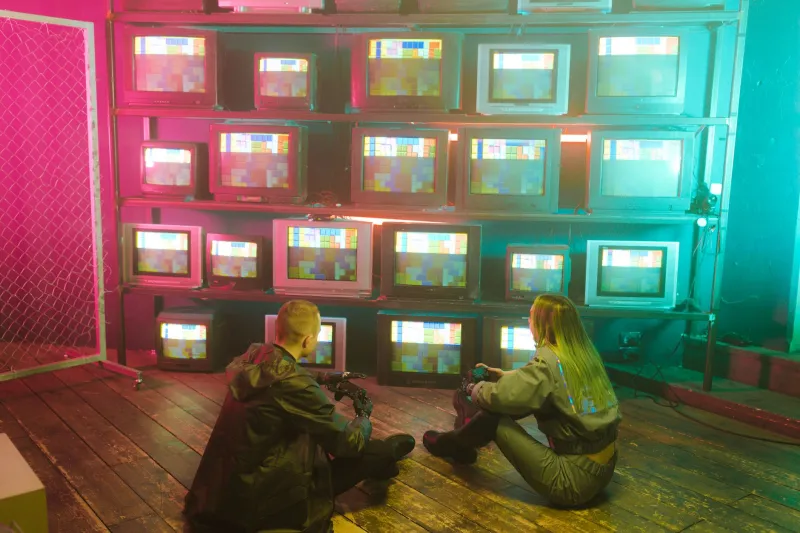
There's a moment in prestige television — you've probably felt it — where a scene hits and you stop tracking the plot entirely. You're just inside the image. A magenta wash bleeds across wet pavement. A character's face is half-swallowed by teal shadow. The set feels like it was constructed inside a fever dream about the future. That moment isn't accidental. It's the product of some of the most intentional visual thinking happening anywhere in American entertainment right now.
Streaming has quietly handed production designers, cinematographers, and colorists a level of creative latitude that network TV never could. Longer episode runtimes, bigger per-episode budgets, and audiences who actually notice aesthetics have created the conditions for something genuinely new: episodic television as a sustained neon-futurist art form.
The Architecture of Electric Worlds
Building a neon-drenched visual universe for television isn't just about slapping colored gels on a set. It's a systems-level design challenge. Production designer Mara Solís, whose work on a recent streaming cyberpunk thriller earned serious industry attention, describes the process as "building a color grammar from the ground up."
"Every location has its own emotional frequency," she explains. "We'll assign specific hues to specific power structures within the world. Corporate spaces get cold blues and whites — clean, oppressive. The underground zones, the places where characters actually live, that's where the neon lives. Pinks, purples, that dirty amber you get from old sodium vapor lights. The palette tells you who has power and who doesn't before a single line of dialogue."
This kind of deliberate chromatic storytelling has become a signature move in the most visually ambitious American productions. It's world-building through wavelength.
Cinematography as Neon Sculpture
If production designers are the architects, the cinematographers are the sculptors — and a new generation of DPs is treating neon light as a primary material rather than a secondary effect.
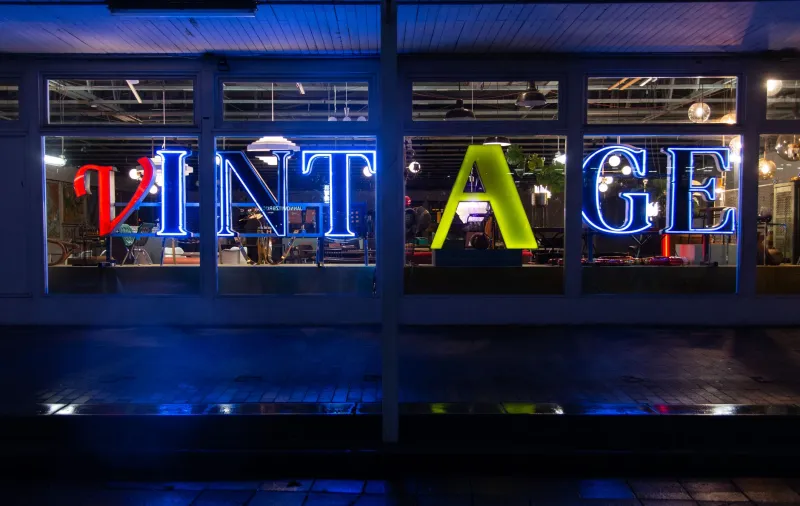
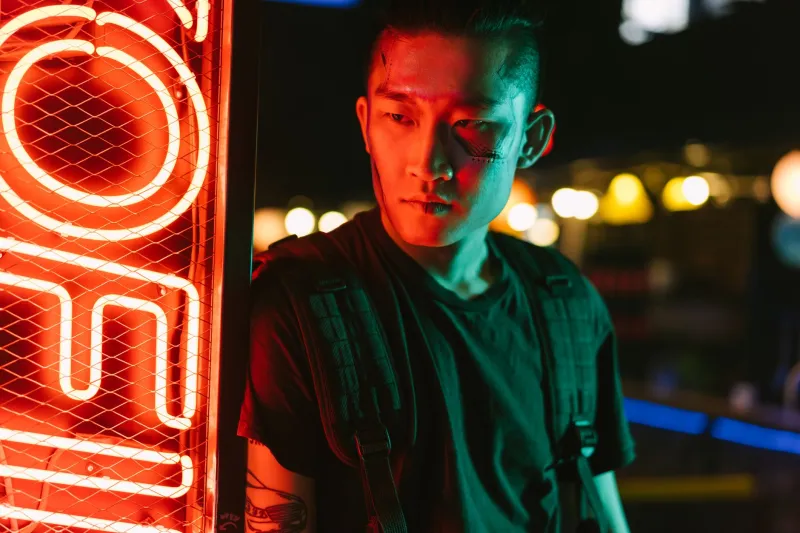
The influence of photographers like Gregory Crewdson and filmmakers like Nicolas Winding Refn has trickled deep into the television pipeline. Cinematographers working on prestige streaming projects talk openly about "practical neon" as a compositional tool — using actual neon signage, LED installations, and custom-built practical light rigs on set rather than relying entirely on post-production color work.
"Post can fix a lot, but it can't manufacture the way neon actually behaves on a human face," says one DP currently in production on a neo-noir limited series set in a fictionalized version of New Orleans. "The way it flickers. The way it reflects differently on skin tones. That's physical. That's real. You have to build it."
The result is imagery that carries genuine textural weight — something that reads differently on a 65-inch OLED screen than anything produced in the era of flat, naturalistic TV lighting.
Synthwave Backdrops and Sci-Fi Worldbuilding
Over on the science fiction end of the streaming dial, production teams are constructing visual environments that lean fully into the synthwave aesthetic — that retro-futurist intersection of 1980s nostalgia and speculative design that's become one of the defining visual languages of contemporary digital culture.
Shows built around near-future dystopias, corporate surveillance states, and underground resistance movements have found neon to be almost narratively indispensable. The aesthetic carries ideological weight: in most of these worlds, neon belongs to the margins, the underground, the human. Sleek corporate minimalism is the visual language of control. Neon is the visual language of resistance.
Colorist Devon Park, who has graded several high-profile streaming series, notes that the final color pass has become a genuinely creative conversation rather than a technical correction. "Directors come in with mood boards now that look like they pulled them from a digital art forum. They're referencing specific artists, specific palettes. The conversation has gotten so much more sophisticated. We're not just making sure skin tones look natural — we're calibrating an entire emotional atmosphere."
Small Screen, Massive Visual Ambition
What's particularly striking about this neon television moment is how thoroughly it has dismantled the old hierarchy between film and TV aesthetics. For decades, television production was defined by compromise — faster schedules, smaller budgets, formats that prioritized coverage over composition. The streaming era has blown that up.
Episode budgets on top-tier streaming productions now routinely rival mid-range feature films. More importantly, the format of serialized television actually amplifies certain kinds of visual design. A production designer building a neon world for a ten-episode series gets to develop and evolve that visual language across hours of screen time. Subtle shifts in palette can track a character's psychological arc across an entire season. Color can become a kind of dramatic structure.
"Cinema gives you two hours," Solís points out. "We get ten. The visual world can breathe. It can change. That's actually a more interesting design challenge than a feature in a lot of ways."
The Audience Is Paying Attention
None of this would matter if audiences weren't responding — but they clearly are. The social media conversation around visually distinctive streaming shows has become its own cultural phenomenon. Screenshot aesthetics, color palette breakdowns, and production design deep dives regularly trend on platforms where the NeonHyper community lives and breathes.
Viewers aren't just watching these shows. They're studying them. Pulling frames for wallpapers. Building fan edits that remix the color grading. Treating individual episodes the way previous generations treated album artwork or graphic novel covers — as objects of sustained aesthetic attention.
That feedback loop is almost certainly influencing what gets greenlit. Studios and streaming platforms can see which visual identities generate the most engagement, and right now, electric and neon-coded aesthetics are punching well above their weight.
What Comes Next
The production designers and cinematographers working in this space are already pushing past the current aesthetic vocabulary. The next wave, several creatives suggest, will move beyond the rain-slicked cyberpunk template toward something stranger and more personal — neon aesthetics filtered through regional American identities, through queer visual culture, through the specific textures of cities and subcultures that haven't been fully mined yet.
Think neon through the lens of the American South, or the high desert, or the industrial Midwest. Think about what electric color looks like when it's not filtered through a Tokyo or Los Angeles imaginary.
The small screen has found its glow. Where it points that light next is genuinely one of the more exciting open questions in American visual culture right now.