Dark Light: The American Designers Turning Neon and Noir Into the Next Big Street Statement
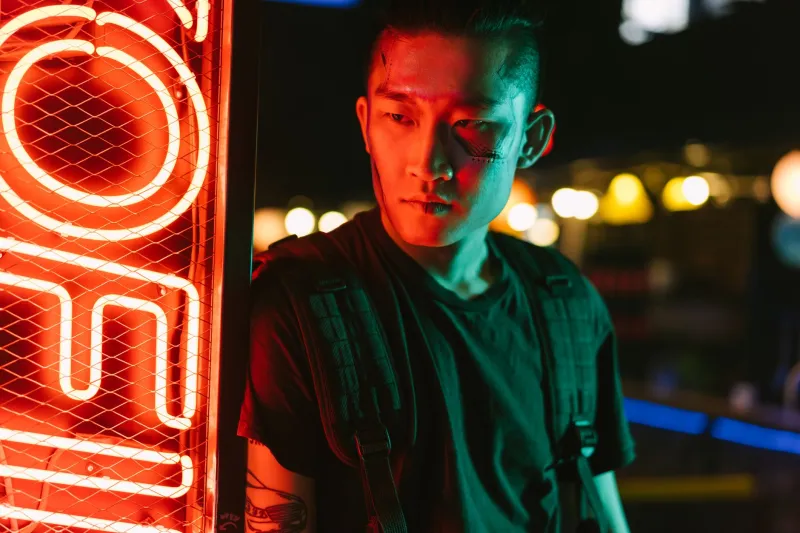
There's a tension at the heart of American streetwear right now that feels almost cinematic. On one side, you've got the long shadow of noir — oversized cuts, dark palettes, that brooding, late-night-city energy that's been baked into street culture since hip-hop claimed the hoodie. On the other, there's a relentless pull toward neon: the hot pinks, acid greens, and electric blues that bleed out of rave culture, cyberpunk fiction, and the glow of your phone screen at 2 a.m. A new wave of US designers isn't choosing between those two worlds. They're crashing them together — and the results are genuinely electric.
Call it neon noir. Call it gloom glow. Whatever you call it, it's showing up everywhere from limited-edition drops in Brooklyn to experimental runway sets in LA, and it's moving fast.
The Aesthetic DNA of Neon Noir
To understand why this fusion hits so hard right now, you have to appreciate what each half of the equation brings to the table. Noir, in fashion terms, isn't just about black clothing — it's a mood. Think trench coat silhouettes, deep hoods, structured shoulders, and layering that feels like armor. It's the visual language of someone navigating a city that doesn't entirely want them there. It's guarded, cool, and just a little dangerous.
Neon, on the other hand, is all exposure. It announces itself. It refuses to be ignored. Rooted in rave culture's rejection of mainstream aesthetics and cyberpunk's vision of a hyper-saturated future, neon color in fashion has always carried a kind of defiance — a refusal to disappear into the background.
When you layer those two sensibilities onto a single garment — say, an oversized black bomber with acid-green contrast stitching, or a structured longline coat with neon-piped seams — something unexpected happens. The darkness makes the color more dangerous. The color makes the darkness more alive. It's a push-pull that feels deeply American: the desire to be seen colliding with the instinct to stay hidden.
The Designers Pushing It Forward
A handful of US-based labels are driving this movement with serious creative intention.
Vanta Youth, a Brooklyn-based collective founded by designer Marcus Osei, has been one of the loudest voices in the space. Their recent "Blackout Season" drop leaned hard into the neon noir aesthetic — matte black utility vests with neon orange reflective paneling, wide-leg cargo pants with glowing yellow zipper pulls, and a hooded parka that looked like it was designed for someone trying to disappear in Times Square while still being impossible to miss. Osei has talked openly about designing for "the kid who grew up watching Blade Runner on a busted TV in a New York apartment" — and that specific cultural reference point is exactly what makes the work feel authentic rather than trend-chasing.
Out on the West Coast, LA-based designer Priya Nakamura of Static Ritual is approaching the aesthetic from a more high-fashion angle. Her pieces carry the structural drama of avant-garde design — sharp shoulders, asymmetrical hems, exaggerated lapels — but she floods them with neon colorways that feel almost violent in their intensity. A recent editorial shot for a California-based culture magazine featured her signature "Circuit Coat" in deep charcoal with electric violet underlining, and the image absolutely exploded on social media. Nakamura has described her work as exploring "what luxury looks like when the grid goes down" — a line that sounds like a cyberpunk novel and lands as a pretty accurate mission statement.
Then there's Phantom Frequency, a label out of Chicago that's been quietly building a cult following since 2021. Their approach is rawer and more DIY — screen-printed neon graphics on deconstructed vintage silhouettes, hand-applied reflective tape on secondhand denim, that kind of thing. It's streetwear that feels genuinely underground even as it starts attracting mainstream attention. A recent collab with a Chicago-based muralist brought neon cityscape imagery onto a run of custom jackets that sold out in under four hours.
How Social Media Turned a Subculture Into a Statement
None of this would be moving at the speed it's moving without social media, and specifically without the visual culture of TikTok and Instagram doing what they do best: collapsing the distance between niche and mainstream.
Neon noir looks incredible on a phone screen. The contrast between dark silhouettes and glowing color pops in a way that feels almost algorithmically designed to stop a scroll. Short-form video content has been particularly powerful here — designers like Osei have built substantial followings by filming lookbooks in parking garages, subway stations, and rain-slicked alleyways, letting the environment do half the creative work. The result is content that feels more like a scene from a neo-noir film than a fashion ad, and audiences are responding to that cinematic quality in a big way.
Drop culture has also played a massive role. Limited releases create urgency, and urgency creates conversation. When Phantom Frequency sold out those collab jackets in four hours, the post-drop discourse — the screenshots, the "did you cop" threads, the resale listings — generated almost as much cultural visibility as the drop itself. In neon noir's underground economy, scarcity is part of the aesthetic.
Reading the Culture: Anxiety, Aspiration, and the American Night
It'd be easy to write off neon noir as just another aesthetic cycle — here today, somewhere in a mood board archive by next year. But there's something more interesting happening beneath the surface.
This trend is emerging at a moment when a lot of young Americans are holding two contradictory feelings at once: a genuine anxiety about the future (economic instability, climate uncertainty, the general sensation that the social contract is fraying) and a stubborn, almost defiant aspiration toward something better, something brighter. Neon noir dresses that tension. The dark silhouettes acknowledge the weight. The neon refuses to give up on the light.
There's also something happening with American identity and visibility. Streetwear has always been about claiming space — in a city, in a culture, in a conversation. Neon noir takes that claim and makes it more complex. It says: I'm here, and I'm not entirely safe, and I'm still going to glow.
Designers like Nakamura are pretty direct about this reading. "Fashion reflects what people need to feel," she's said in interviews. "Right now people need to feel powerful and uncertain at the same time. That's what this is."
What's Next for the Glow
The trajectory for neon noir feels genuinely open right now, which is part of what makes it exciting. There are signs of broader industry interest — a few larger streetwear labels have started incorporating neon accent work into their seasonal collections, and some luxury houses have been quietly watching the space. Whether mainstream adoption kills the edge or amplifies it is the perennial question in street culture, and neon noir is going to have to answer it soon.
For now, the most interesting work is still happening at the margins — in the small drops, the collaborative projects, the designers who are building something with real creative conviction rather than chasing a trend report. That's where NeonHyper lives, and that's where the real story is.
The American night has always been a canvas. Right now, somebody's painting it in colors you can't look away from.