Main Street After Dark: The Small-Town Neon Revival Rewriting American Identity
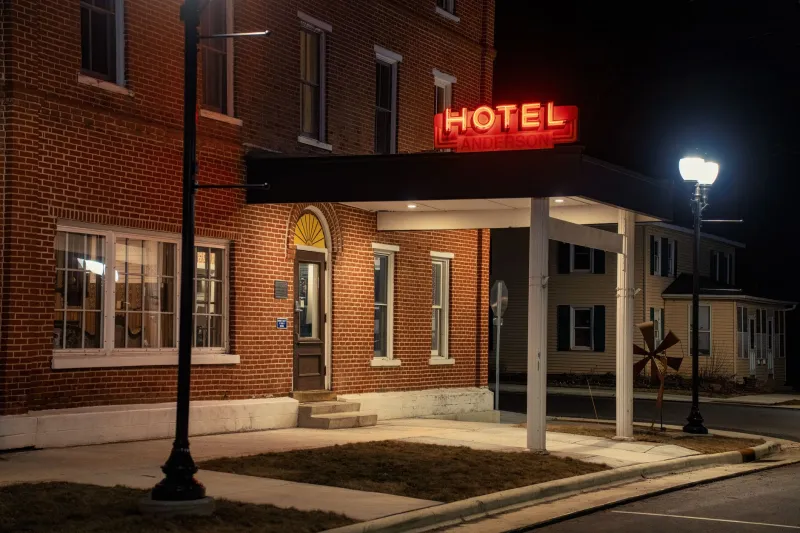
There's a diner in Galesburg, Illinois, where a hand-bent neon sign — cream-colored tubes shaped into a coffee cup with a curling wisp of steam — has hung in the window since 1954. For about twelve years, it sat dark. The transformer had blown, the owner had passed, and nobody could quite justify the repair bill. Then, in 2022, a group of locals pooled together a few hundred dollars, tracked down a neon artisan two counties over, and got the thing humming again. The night it came back on, people drove in from thirty miles away just to see it.
That moment — quiet, local, almost absurdly modest in scale — is exactly what's happening all across small-town America right now. While the big culture conversation about neon tends to orbit Las Vegas marquees or Brooklyn rooftop installations, a genuinely grassroots movement is lighting up places that rarely make anyone's aesthetic mood board. And honestly? That's what makes it so interesting.
Why Neon Means Something Different Outside the City
In a major metro, a neon sign is often a design choice — a vibe, a branding decision, a way to signal that your cocktail bar is the right kind of cool. Out in a town of 4,000 people, a neon sign is something else entirely. It's a landmark. It's the thing you describe when you're giving someone directions. It's the image that pops into your head when someone says the name of your hometown.
That specificity is exactly why neon preservation advocates in smaller communities talk about these signs with a reverence that feels almost architectural. "You lose the sign, you lose a piece of the town's actual memory," says one volunteer with the Route 66 Corridor Preservation Program, a federally supported initiative that has helped fund restoration projects at roadside stops across Missouri, Oklahoma, and New Mexico. "These aren't just decorations. They're documents."
And those documents are disappearing fast. Decades of corporate franchise expansion have systematically replaced independent businesses — and their handcrafted signage — with standardized logos and LED-lit plastic. The visual homogenization of American commercial strips is well documented. What's less discussed is the quiet resistance forming at the local level.
The Artisans Keeping the Craft Alive
Neon bending — the actual physical craft of shaping glass tubes and filling them with gas — is a dying trade in the traditional sense, but it's not dead. Across the country, a loose network of craftspeople are keeping it going, often learning from aging masters or piecing together knowledge from old trade manuals and online communities.
In Marfa, Texas — already something of a cultural outlier — a small sign shop has become a quiet pilgrimage destination for people who want hand-bent work done the old way. The owner, who learned the craft from her grandfather, describes her clientele as a mix of local ranchers, boutique hotel owners, and out-of-towners who found her through word of mouth. "Nobody's getting rich off neon bending," she says. "You do it because you love it. And because someone has to."
Similar stories are playing out in Bozeman, Montana; Clarksdale, Mississippi; and Traverse City, Michigan, among other places. The common thread isn't geography — it's motivation. These artisans aren't chasing a trend. They're responding to a genuine local demand from communities that want something real hanging above their doors.
Civic Pride, Lit in Glass and Gas
Some of the most compelling neon projects happening right now aren't commercial at all. They're civic. Community arts organizations, historical societies, and downtown development groups are increasingly commissioning original neon works as public art — not as replicas of anything old, but as entirely new statements about who a place is and what it values.
In Paducah, Kentucky — a town that has built a surprisingly robust arts identity around its Lower Town neighborhood — a series of neon installations commissioned through the city's public art program have become genuine tourist draws. The pieces reference local history: the Ohio River, the region's quilt-making tradition, the silhouette of a towboat. They're unambiguously contemporary in their design language, but they're rooted in something specific to that place. That combination is rare, and it works.
Similar thinking is driving projects in Winslow, Arizona (yes, that Winslow — the Eagles song one), where neon has become part of a broader effort to reclaim the town's identity from the slow erosion of I-40 bypass traffic. Local business owners and the Winslow Visitor Center have worked together to restore several vintage signs along Second Street, turning what was once a faded strip into something approaching a living museum of mid-century American roadside culture.
Resistance to the Algorithm-Approved Aesthetic
There's a cultural argument underneath all of this that's worth naming directly. The rise of Instagram-optimized interiors and franchise-standardized storefronts has produced a visual landscape that's technically polished and almost completely soulless. Everything looks like it was approved by the same committee. Neon — especially old, slightly imperfect, locally made neon — is the opposite of that.
The buzz of a transformer, the slight variation in tube color, the way a hand-bent letter doesn't quite match the geometry of a font file: these are features, not bugs. They signal that a human being made this, that a specific place paid for it, and that it belongs to a community rather than a brand manual. In an era of frictionless digital sameness, that kind of specificity carries real weight.
For younger people in small towns especially — people who grew up watching their downtowns hollow out, who saw local businesses replaced by dollar stores and national chains — the restoration or commissioning of a neon sign can feel like an act of defiance. It's a way of saying: we're still here, this place is still ours, and it looks like this.
What Comes Next
The neon revival in small-town America isn't a coordinated movement with a manifesto. It's messier and more organic than that — a diner owner in Illinois, a sign bender in Texas, a historical society in Kentucky, a city arts program in Arizona, all doing their own thing for their own reasons. But the cumulative effect is starting to feel like something.
Preservation funding from sources like the National Trust for Historic Preservation and state humanities councils is increasingly being directed toward signage projects that would have been overlooked a decade ago. Meanwhile, the craft itself is getting new attention from a generation of makers who see neon bending as both a viable trade and a form of creative expression worth taking seriously.
For a platform like NeonHyper, rooted in the idea that glowing, vibrant visual culture belongs to everyone — not just gallery walls and major metros — this is exactly the story worth watching. The most electric moments in American design history have often started in places no one expected. Right now, a lot of those places are small, overlooked, and quietly switching their signs back on.
And the light is beautiful.