Skin Deep in the Future: How Cyberpunk Is Rewriting American Tattoo Culture
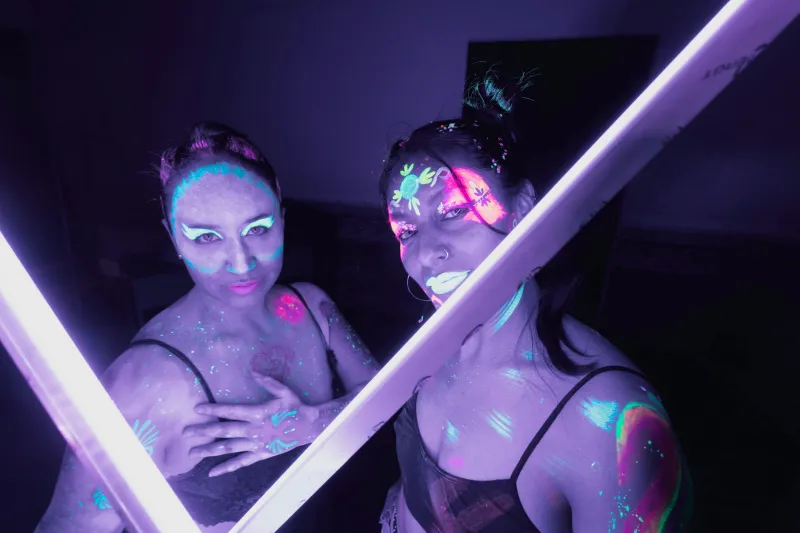
There's a moment when you first see a UV-reactive tattoo under a blacklight that genuinely stops you cold. What looks like a bold, graphic design in daylight suddenly erupts into glowing violet and electric green — like someone cracked open a neon sign and poured it under the skin. That moment? That's exactly what a growing movement of American tattoo artists is chasing, and honestly, they're nailing it.
Cyberpunk aesthetics — think fractured circuitry, corrupted data visuals, blown-out color palettes, and the general vibe of a dystopian megacity at 2 a.m. — have been creeping into tattoo studios across the US for a few years now. But lately, the movement has hit a genuine inflection point. What started as a niche experiment among a handful of progressive artists has evolved into a full-blown subgenre that's reshaping how younger Americans think about permanent self-expression.
Where Digital Art Ends and Skin Begins
The crossover makes a lot of sense when you think about it. Tattoo art has always borrowed from graphic design, illustration, and fine art. But the current generation of tattoo artists grew up on screens — they studied digital illustration, played games soaked in neon light, and scrolled through Instagram feeds built around visual maximalism. It was only a matter of time before those influences bled onto skin.
Artists working in this space often describe their process as translating a digital file into flesh. They'll sketch concepts in Procreate or Photoshop first, leaning into the tools' ability to layer glitch effects, chromatic aberration, and color-burn gradients before ever picking up a tattoo machine. The result is body art that genuinely feels like a screenshot from a video game or a still from an anime — except it's permanent and it's on a real person walking around Chicago or Brooklyn.
The UV Revolution
One of the most visually dramatic techniques driving this movement is UV-reactive ink. These specialty pigments are nearly invisible under normal lighting but blaze with color under ultraviolet light. Artists are using them to add a hidden layer to their cyberpunk pieces — a secret dimension that only reveals itself in certain environments, like a club, a festival, or anywhere with blacklights.
In Los Angeles, artists working out of studios in Silver Lake and Echo Park have been among the most aggressive experimenters with UV ink, layering it beneath hyper-saturated base colors to create a depth effect that mimics the bloom lighting you'd find in a video game engine. The aesthetic is unmistakably digital, which is kind of the whole point.
It's worth noting that UV inks come with real considerations — they require more careful aftercare and can fade differently than traditional pigments. But for clients who are specifically chasing that futuristic, light-reactive look, the trade-off is worth it. Demand for UV-inclusive pieces has reportedly surged at studios that specialize in this style, particularly among clients in their twenties.
City by City: Where the Movement Is Happening
The cyberpunk tattoo scene isn't centralized — it's spread across multiple US cities, each with its own flavor.
Los Angeles is probably the loudest hub right now. The city's overlap between entertainment, streetwear, and digital art culture creates a natural breeding ground for this kind of aesthetic maximalism. Studios in neighborhoods like Melrose and Highland Park are booking out months in advance for artists who specialize in neon-saturated, tech-influenced work.
Chicago has developed a particularly interesting angle on the style, with several artists blending cyberpunk visuals with elements of traditional American tattooing — bold outlines, classic imagery — but then corrupting them with glitch overlays and neon color breaks. It's a collision of old-school craft and futuristic visual language that feels distinctly Midwestern in its directness.
New York brings its own energy, naturally. Brooklyn studios in particular have become incubators for artists pushing into more abstract, almost post-human territory — pieces that look less like conventional tattoos and more like body modifications straight out of a William Gibson novel. The city's density of creative talent means artists are constantly in dialogue with each other, and the style is evolving fast.
Social Media as the Amplifier
None of this would be moving as fast without Instagram, TikTok, and Pinterest doing what they do. Cyberpunk tattoos are genuinely built for social media — they're visually arresting, they photograph dramatically, and they reward a second look. A well-shot photo of a glowing UV piece under blacklight is practically engineered to stop a scroll.
Artists who've built followings in this space talk about how a single viral post can generate hundreds of inquiry messages overnight. The visual language travels internationally, too — American artists in this niche are getting requests from clients in Europe and Asia who found them through social media and are willing to fly in for a session. That kind of reach would have been unthinkable for a tattoo artist even fifteen years ago.
The flip side is that the aesthetic has started to inspire a lot of imitation, which is both a sign of its success and a potential dilution risk. The artists who are genuinely innovating in this space are increasingly focused on technical complexity and conceptual depth to differentiate their work from artists who are just chasing the surface-level look.
More Than a Trend
It's tempting to write cyberpunk tattoo aesthetics off as a moment — something tied to a cultural peak in cyberpunk's mainstream popularity that'll fade when the next wave rolls in. But the artists working in this space seem less concerned with that framing. For them, this is about a genuine evolution in what tattooing can be.
The tools are better, the inks are more sophisticated, and the artists coming up now have a visual vocabulary that's fundamentally shaped by digital culture in a way that previous generations simply didn't. The cyberpunk aesthetic isn't a costume they're wearing — it's a native language.
And for their clients, getting one of these pieces is something more than following a trend. It's a statement about identity, about living in a world that's increasingly blurred between the physical and the digital, and about wanting your body to reflect that reality. Neon under the skin. Glitch in the flesh. That's not going anywhere.