Pixel to Plasma: How Virtual Worlds Are Driving a Very Real Neon Obsession
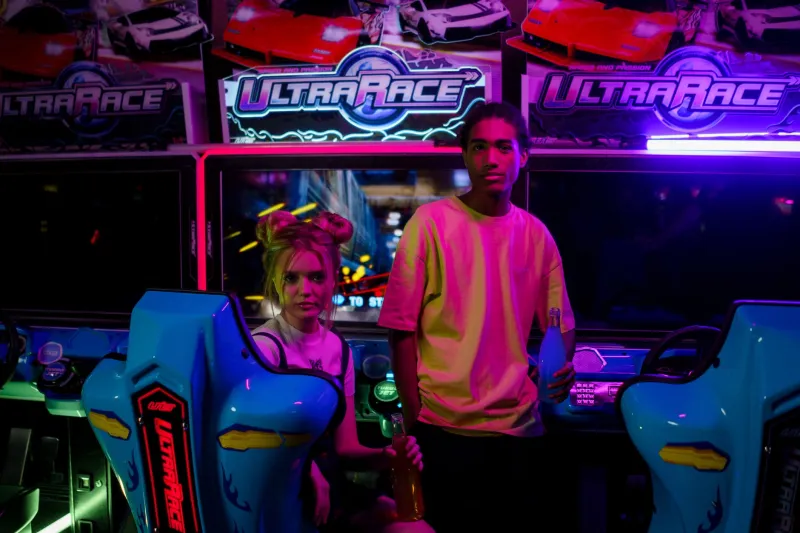
Here's a design feedback loop that nobody really planned for: a teenager in Phoenix customizes their avatar's apartment in a virtual world, adds a wall of glowing neon signage because it looks incredible on screen, screenshots it, posts it to TikTok, and six months later that same aesthetic is showing up in home decor stores in actual Phoenix. The virtual inspired the physical, which then got photographed, shared, and fed back into virtual spaces as reference material.
This is how neon culture is evolving in 2024 — not in a straight line from craft tradition to contemporary art, but in a constant, accelerating loop between digital and physical worlds.
The Metaverse as Mood Board
Platforms like Roblox, Fortnite Creative, Decentraland, and a constellation of smaller web3 virtual worlds have become significant sources of visual inspiration for a generation of designers who grew up treating screens as primary reality. In these spaces, neon isn't constrained by physics, gas availability, or electrical code. Tubes can be any color. Signs can float in mid-air. Light can pulse in perfect synchronization with ambient music.
The result is a version of neon aesthetics that's both familiar and fantastical — recognizably descended from American roadside signage and retro-futurist design, but pushed into territories that glass and gas simply can't reach.
Web3 designer Zara Kim, who creates virtual spaces for brands and independent collectors, describes her work as "designing for the eye without apologizing to physics." Her virtual installations — some sold as NFTs, others commissioned as branded environments — feature neon arrangements of staggering complexity: fractal tube structures, color-shifting gradients, signs that respond to user proximity and adjust their glow accordingly.
"The interesting thing is that my clients increasingly want to bring elements of this into their physical spaces," Kim says. "They'll commission a virtual environment and then ask me to connect them with a sign maker who can build a physical version of a specific element. The digital piece becomes the prototype."
From Screen to Sign Shop
That prototype-to-physical pipeline is real and growing. Custom neon sign businesses across the US report a significant uptick in customers arriving with screenshots and digital renders as their starting point — often images pulled from games, virtual worlds, or the work of digital artists on platforms like Instagram and Pinterest.
Los Angeles-based sign maker Tomas Guerrero has noticed the shift clearly over the past three years. "Five years ago, most custom orders were based on something the customer had seen in a bar or restaurant. Now I'd say a third of my inquiries start with a digital image. Someone saw a design in a game, or a digital artist made something they loved, and they want the physical version."
The translation isn't always smooth. Virtual neon can do things that real neon can't — those perfect gradients, the floating geometry, the instant color changes. Customers sometimes need to be walked through what's achievable with actual glass and gas versus what only exists in a renderer. But Guerrero says the conversation has gotten easier as customers become more visually literate. "They understand the difference between a game asset and a real sign. They just want to get as close as possible."
Gen Z's Both/And Relationship With Space
For Gen Z specifically, the distinction between digital and physical environments is genuinely less meaningful than it is for older generations. A bedroom exists simultaneously as a lived space and as a backdrop for content creation. An apartment is both a home and a virtual-world reference point. Design decisions get made with both realities in mind.
Interior designer Priya Santos, who works primarily with clients in their 20s and early 30s in New York and LA, describes this as "ambient content awareness." "My clients are always thinking about how a space photographs and videos. Neon is perfect for that — it photographs beautifully, it creates instant mood, and it connects to a visual language their audience already recognizes from digital spaces."
Santos has seen a specific pattern emerge: clients who are deeply embedded in gaming or virtual world communities tend to want neon that references the aesthetics of those spaces rather than traditional American signage. Less diner nostalgia, more cyberpunk cityscape. Less Route 66, more Blade Runner-meets-Minecraft.
"There's a client I worked with last year who basically wanted their living room to feel like the interior of their favorite Roblox hangout space," Santos recalls. "We did custom neon, LED strip accents, color temperature tuning — the whole thing. It looked incredible. And it was completely legible to their friends who knew the reference."
Brands Catching On
Where Gen Z consumers go, brands follow. Several major retailers — including furniture chains and home goods companies — have launched neon-adjacent product lines explicitly marketed around metaverse and gaming aesthetics. The language in these campaigns is telling: "bring your digital world home," "IRL level up," "your feed, but physical."
The strategy makes sense. If a generation of potential customers has already decided what they want their ideal space to look like through hours of virtual world customization, selling them the physical version of that aesthetic is a relatively straightforward pitch.
Sportswear and streetwear brands have moved similarly. Neon accents in apparel and accessories have been climbing steadily, and several drops have leaned explicitly into the virtual-to-physical narrative — designing digital wearables for avatar platforms first, then producing physical versions for release alongside them.
The Artists at the Center
At the creative heart of all this is a generation of artists who work fluidly across both digital and physical mediums — sometimes making virtual neon for platforms, sometimes fabricating physical installations, often doing both simultaneously and treating them as aspects of a single practice.
Kim, the web3 designer, recently completed her first physical installation — a commission for a creative agency's New York office that directly translated elements of her virtual work into fabricated neon and programmable LED. "Standing in the room with it was genuinely strange," she says. "I've looked at that design for months on a screen. Seeing it glow in a physical space, with people walking through it, was a completely different experience. Better, honestly. More alive."
That word — alive — keeps coming up in conversations about the physical-digital neon loop. There's something that happens when a design leaves the screen and enters a room that no render can fully anticipate. The light behaves differently. It interacts with surfaces, with people, with air. It becomes part of a place rather than a representation of one.
Maybe that's the real story here. Virtual worlds have given a generation the vocabulary and the appetite for neon aesthetics. The physical world is where those aesthetics find their full weight. Both matter. Both feed each other. The loop keeps going.