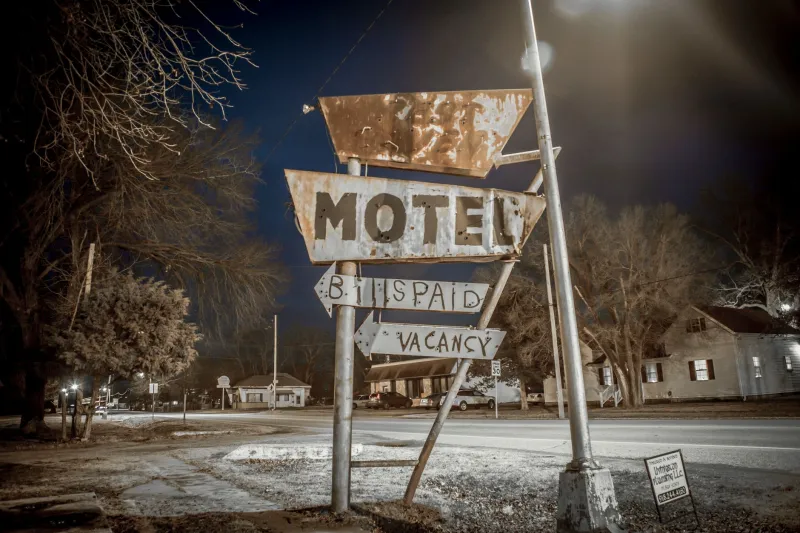
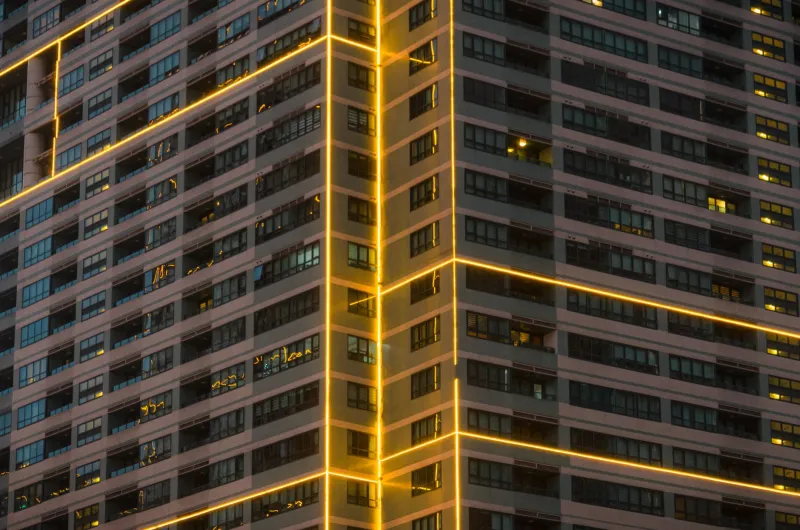
Trespassing in the Dark: America's Guerrilla Neon Artists Are Lighting Up Places Nobody's Supposed to See
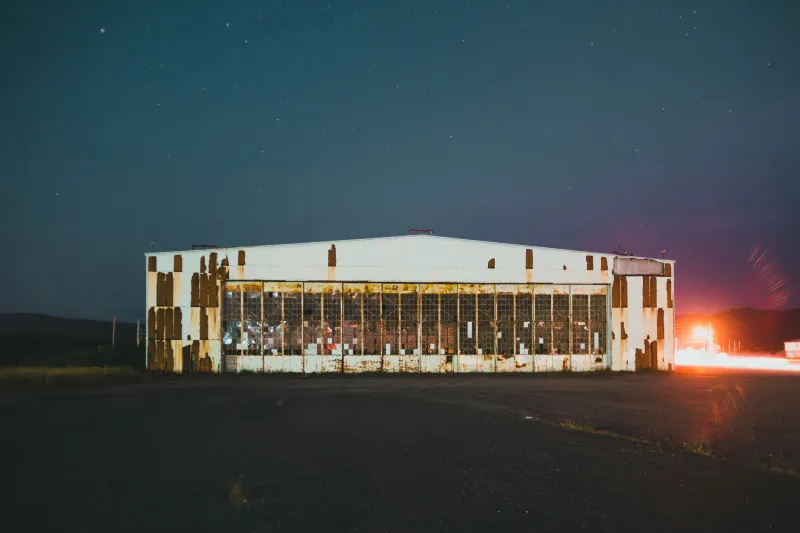
Somewhere in the industrial fringe of a mid-sized American city — let's leave the geography vague, because that's how the people involved prefer it — a decommissioned meatpacking plant glows pink at 2 a.m. on a Tuesday. Nobody scheduled this. Nobody permitted it. The neon tubes threading through the broken window frames weren't installed by a contractor with a license. They were put there by a 29-year-old who goes by the tag Lurid, who hauled the equipment in a duffel bag and worked by headlamp for six hours straight.
By morning, the installation is documented on three separate photography accounts and shared thousands of times. By afternoon, code enforcement has received two complaints. By the following weekend, Lurid is already scouting the next location.
This is the neon underground. It doesn't have a manifesto. It barely has a name. But it's operating in cities from Detroit to Houston to Baltimore, and it's forcing a complicated conversation about public space, artistic permission, and what it means to reclaim a place that capitalism and city planning have simply abandoned.
The Anatomy of an Unauthorized Installation
Guerrilla neon work is not the same as graffiti, though the two share a philosophical bloodline. Where spray paint is fast and often permanent, unauthorized neon installations are temporary by nature — the equipment has to come back out eventually, either by the artist's choice or by city intervention. That impermanence is part of the point.
"I'm not trying to own the space," says an artist who operates under the name Phosphene, based in the Rust Belt. "I'm borrowing it for a night. The building was just sitting there, rotting, not doing anything for anyone. I gave it a few hours of life."
The technical process varies by practitioner. Some use traditional glass-tube neon, sourced from estate sales, sign shop closeouts, or salvaged commercial signage. Others build their own LED flex arrangements that mimic neon's glow with less fragility and more portability. A few are working with EL wire — electroluminescent wire — which can be threaded through structures in ways rigid glass tubes never could.
The common thread is site-specificity. These aren't portable art objects dropped into random locations. The best guerrilla neon work responds directly to the architecture it inhabits — tracing the outline of a collapsed roof, illuminating the ghost of a painted advertisement on a brick wall, following the curve of a drainage pipe through an abandoned subway maintenance bay.
Cat, Mouse, and the Code Enforcement Office
City authorities occupy an awkward position in this story. On one hand, unauthorized entry to condemned structures is a genuine safety and liability issue — these buildings are dangerous, and cities carry real risk when someone gets hurt inside one. On the other hand, prosecuting artists for making something beautiful in a space the city has failed to maintain or develop carries its own kind of PR problem.
In practice, enforcement tends to be reactive and inconsistent. If an installation generates noise complaints or visible foot traffic, action follows quickly. If it's documented quietly online and doesn't draw a crowd to the physical location, it often goes unaddressed.
"They're not hunting us," says one artist who has installed work in at least four cities without incident. "They respond when they have to. Which means if you're smart about it, you have a window."
That window is getting discussed more openly as the movement grows. Online communities dedicated to urban exploration — the broader practice of accessing off-limits structures for photography and documentation — have increasingly overlapped with neon art circles. The result is a loose, informal infrastructure of location scouting, access knowledge, and post-documentation that spreads installation work far beyond whatever city it physically occupies.
Is This Activism or Just Aesthetic?
The harder question, and the one that splits opinions even within the community, is whether guerrilla neon work is making a political argument or just making pictures.
Some practitioners are explicit about the activism framing. They see unauthorized installations in neglected neighborhoods as a direct response to the way American cities have systematically underinvested in working-class and low-income areas while pouring resources into downtown development corridors. Lighting up a condemned building in a neighborhood that hasn't seen a public art investment in decades is, in this reading, a form of redistribution — of attention, of beauty, of the sense that a place matters.
"When the city lets a building rot for fifteen years and then suddenly wants to demolish it for a parking structure, that's a statement about who the city thinks deserves nice things," says a Detroit-based artist collective that has produced several large-scale unauthorized installations in the city's east side. "We're making a counter-statement."
Others are more honest about the aesthetic motivation. They're drawn to abandoned spaces because those spaces are visually extraordinary — the decay, the texture, the scale — and neon transforms them into something that feels genuinely cinematic. The political dimension is real but secondary.
Both positions coexist in the same movement, sometimes in the same person, and that ambiguity is arguably part of what makes the work interesting.
When the City Catches Up
Occasionally, the dynamic flips entirely. A handful of guerrilla neon installations have been so well-received — so widely circulated, so clearly driving interest in neglected areas — that city officials have quietly allowed them to remain, or even approached the artists about legitimate commissions.
This is the paradox at the heart of unauthorized public art in America: the rule-breaking is often what generates the institutional interest that eventually legitimizes the work. The city ignores a space until someone unauthorized makes it worth paying attention to, at which point the city wants a piece of the credit.
Whether that outcome represents a win for the artists or a co-optation of their energy depends heavily on who you ask. Some see commissioned work as a betrayal of the underground ethos. Others view it as evidence that the tactic works — that unauthorized light, placed in the right forgotten corner, can actually shift what a city decides to value.
Lurid, for one, has been approached twice about legitimate projects. He turned down both offers. "The permission changes the work," he says. "I don't mean that in a pretentious way. I mean it literally. When you have to submit a proposal and get approval and carry insurance, you're making a different kind of art. That art is fine. It's just not what I'm doing."
The pink glow in the meatpacking plant faded by sunrise. The building is still condemned. Nobody fixed anything. But for a few hours, in a part of the city that the planning commission had functionally written off, something was alive and electric and impossible to look away from. Whether that counts as reclamation probably depends on what you think cities are for.