Cities That Don't Exist Yet: The American Concept Artists Dreaming Up Neon Civilizations From Scratch
Cities That Don't Exist Yet: The American Concept Artists Dreaming Up Neon Civilizations From Scratch
There's a city somewhere in the Pacific Northwest — at least in concept — where every transit line runs beneath bioluminescent canals, where the signage is written in three invented scripts, and where the rain never quite stops catching the purple glow off the elevated market districts. No one has ever walked through it. No game studio commissioned it. No film director approved the color palette. It exists entirely in the mind of a concept artist named Dara Voss, spread across a portfolio of detailed environment paintings, lore documents, and infrastructure diagrams that she posts to her ArtStation page every few weeks.
She has 180,000 followers.
This is the world of independent worldbuilding concept art — a discipline that sits somewhere between architecture, speculative fiction, and visual design, and one that is quietly having a serious cultural moment in the United States right now.
Building for No One (and Everyone)
Traditional concept art has always been a service industry. You design the alien planet because the studio needs it for the third act. You render the dystopian cityscape because the art director has a vision and a budget and a release window. The work is collaborative, iterative, and ultimately in service of someone else's story.
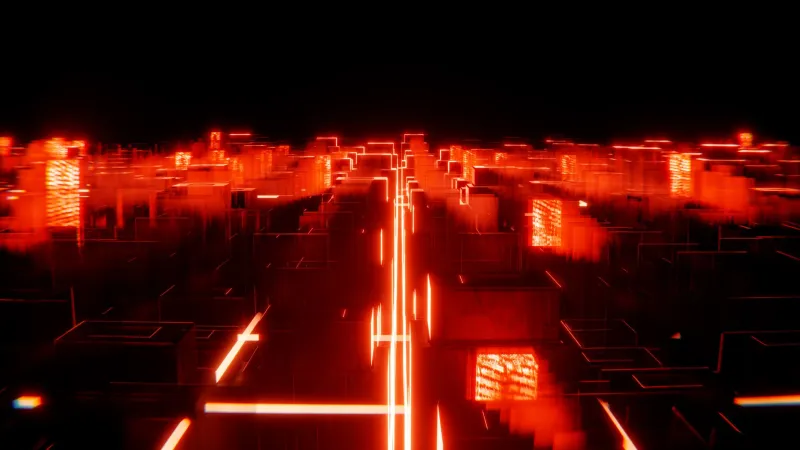
What independent worldbuilding artists are doing is fundamentally different. They're constructing civilizations — complete with economies, transit systems, cultural rituals, and architectural dialects — purely because the world demands to exist. The neon-lit megacity isn't a backdrop for a protagonist. It is the protagonist.
"I think about the electricity grid before I think about the aesthetics," says Marcus Oyelaran, a Chicago-based concept artist whose ongoing project, Vaelthar, imagines a post-collapse North American city-state where neon signage functions as a kind of civic language — color codes denoting neighborhood allegiance, trade routes, and social caste. "If you understand how the light is powered, you understand why it looks the way it does. The glow isn't decorative. It's structural."
Oyelaran has been building Vaelthar for three years. He supports the project through a Patreon that now funds his full-time creative practice, with subscribers receiving lore updates, process breakdowns, and early access to new environment pieces. The work has never been attached to a commercial property. It may never be. That's sort of the point.
The Platform Shift That Made This Possible
A decade ago, building an elaborate fictional world without a studio behind you was essentially a private obsession. You could post to DeviantArt or share in forums, but the infrastructure for sustaining that kind of long-form, independent creative project barely existed. ArtStation changed that for the professional-facing side of things — it gave concept artists a portfolio platform with genuine industry credibility, where personal work sat alongside commercial credits without apology. Patreon layered in the economic model that let creators turn audiences into patrons.
The result has been an explosion of what the community sometimes calls "personal IP" — artist-owned fictional universes that exist as living, evolving bodies of work rather than static portfolios.
And a striking number of them are drenched in neon.
The aesthetic isn't arbitrary. Neon-lit environments — rain-slicked streets, cascading holographic signage, glowing transit infrastructure, electric skylines — are visually rich, technically demanding, and culturally resonant in ways that reward deep worldbuilding. They carry a mythology: cyberpunk's long shadow, the retrofuturist dreams of mid-century America, the visual vocabulary of blade runner cities and Tokyo side streets. But the best independent worldbuilders aren't just reciting that vocabulary. They're rewriting it.
New Tools, New Worlds
The technical side of this work has evolved dramatically. Most of these artists are working across a combination of tools that would have seemed absurdly powerful to concept artists from even fifteen years ago. Procreate and Photoshop handle the painterly environment work. Blender and Cinema 4D let artists block out three-dimensional spaces before committing to a painted composition. Midjourney and other AI image tools have entered the conversation too — though the artists doing serious worldbuilding work tend to use them as mood-boarding tools rather than final output generators.
"I use AI the way I used to use Pinterest," says Leila Saenz, a Los Angeles-based artist whose project Cirra imagines a floating city-network above the American Southwest, where each platform-city has its own neon dialect and atmospheric signature. "It helps me figure out what I'm not trying to do. The actual work is still about making decisions — about what this specific culture would build, and why."
Saenz's process involves what she calls "infrastructure-first design" — she maps out power systems, water management, and population density before she ever starts thinking about how the light looks. The neon aesthetic in Cirra emerges from the logic of the world: the platforms run on solar-harvested energy that gets distributed through visible conduit networks, and the signage traditions developed as a way of communicating across the gaps between platforms in low-visibility conditions. The glow has a reason.
Why Commercial Studios Are Paying Attention
Here's the thing about building elaborate fictional neon worlds with no client attached: the clients notice anyway.
Several of the artists working in this space have fielded inquiries from game studios, streaming productions, and advertising agencies who discovered their personal work and wanted to license the aesthetic or bring the artist in as a consultant. The pipeline, it turns out, runs both ways. Independent worldbuilding work functions as an extended, living portfolio — one that demonstrates not just technical skill but conceptual depth, narrative thinking, and the ability to sustain a visual system across hundreds of individual pieces.
"A single environment painting tells you I can paint," Oyelaran says. "Three years of Vaelthar tells you I can think."
That distinction matters enormously to studios doing pre-production on projects with complex fictional worlds. Hiring someone who has already proven they can build a civilization from scratch — with consistent internal logic, evolving visual language, and genuine creative investment — is a very different proposition from hiring someone who can execute a brief.
The Philosophy of the Unbuilt
There's something genuinely interesting happening at the philosophical level of this work, too. These artists are investing enormous creative energy into places that will never physically exist, that most of the people who encounter them will experience only as images on a screen. And yet the response from audiences suggests that something real is being transmitted.
People write to Saenz about Cirra the way they write to novelists about beloved fictional cities. They ask about the food, the transit culture, the relationship between the platform-cities. They want to know what it smells like when the rain hits the lower decks.
"I think people are hungry for worlds that feel genuinely thought through," she says. "Not just aesthetically beautiful, but logical. Places that could work, even if they don't exist."
In a cultural moment saturated with IP franchises and sequels and reboots, there's something quietly radical about that impulse — building a neon-lit civilization for no commercial reason, sharing it freely, and trusting that the work will find the people it's meant for.
The cities don't exist. The glow is real anyway.