From Pixels to the Big Screen: How Game Concept Artists Are Rewriting Hollywood's Visual Playbook
From Pixels to the Big Screen: How Game Concept Artists Are Rewriting Hollywood's Visual Playbook
There's a specific kind of visual imagination that gets trained inside a video game studio. It's one that has to think in three dimensions before a single polygon is placed, that has to sell a world's entire emotional register through a single piece of concept art pinned to a mood board. It's precise, cinematic, and — increasingly — absolutely drenched in neon.
Now, Hollywood has noticed.
Over the last several years, a growing pipeline of American video game concept artists has been making the jump from game studios to major film and television productions. They're bringing with them a visual language forged in cyberpunk cities, rain-slicked megastructures, and the kind of electric color work that turns a dark alley into something you can't stop staring at. And the industry on the other side of that leap? It's changing because of them.
The Skills That Transfer — and Then Some
Concept art in the games industry is brutal in the best possible way. You're not just designing a character or a vehicle in isolation. You're building an entire visual ecosystem — one that has to remain internally consistent across hundreds of hours of player experience. That means mastering lighting logic, color theory, environmental storytelling, and the kind of futuristic world-building that feels grounded even when it's completely invented.
For artists working in the cyberpunk and neon-noir corners of game development, that training gets even more intense. Think about the visual demands of a game like Cyberpunk 2077 or the Deus Ex franchise — every surface has to glow with purpose, every shadow has to mean something. The neon isn't just decoration. It's narrative infrastructure.
When those artists walk into a Hollywood pre-production meeting, they're not starting from scratch. They're bringing a fully developed visual intelligence that a lot of traditionally trained film illustrators simply don't have in the same way.
"Game concept artists think about light as a world-building tool, not just a mood tool," says one Los Angeles-based production designer who has worked on multiple streaming tentpole series. "When I started hiring from the games side, I noticed immediately that these people understood how a neon sign in the background of a shot could tell you everything about the power structure of that city. That's not something you can teach quickly."
Artists Making the Leap
Take someone like Jordan Mace, a concept artist who spent nearly a decade at mid-sized game studios in Austin and Seattle before transitioning to film work around 2020. Mace built a reputation designing the visual identities of fictional megacities — the kind of work that required mapping out an entire urban ecosystem's lighting grid before a single in-game asset was created.
Today, Mace is doing pre-visualization work for a major sci-fi film currently in production, designing the look of sprawling exterior environments that borrow heavily from the neon-saturated aesthetic vocabulary of his game work. "The tools changed more than the thinking," Mace says. "I still start every project the same way — what does the light tell you about who has power here?"
Then there's Dani Reyes, a concept artist and illustrator from the Pacific Northwest whose game portfolio reads like a love letter to blade runner aesthetics and retro-futurist architecture. After years of freelancing for game developers, Reyes landed a role on the art department of a high-profile streaming series set in a near-future American city. The show's visual identity — a hypersaturated mix of analog decay and electric color — is immediately recognizable as the work of someone who grew up thinking in neon.
"I think Hollywood is finally getting that game artists aren't just technical people," Reyes explains. "We're visual thinkers. We've been building cinematic worlds for years — we just weren't doing it on film sets."
Why Hollywood Took So Long
Honestly? Institutional snobbery played a role. For a long time, there was a subtle but real hierarchy in American visual entertainment — film and television occupied the "legitimate art" tier, while games were considered a commercial, almost industrial pursuit. Concept artists who came up through game pipelines often found themselves underestimated in Hollywood rooms, their portfolios treated as impressive-but-not-quite-serious.
That attitude has been melting fast, and not just because of the obvious cultural mainstreaming of gaming. It's also because the visual demands of contemporary blockbuster filmmaking have gotten so complex — and so specifically aligned with the kind of world-building that game artists do instinctively — that studios can't afford to ignore that talent pool anymore.
The explosion of streaming content has accelerated the shift. When you're producing multiple high-budget series simultaneously, you need concept artists who can work fast, think holistically, and deliver fully realized environments rather than isolated character sketches. Game artists, trained in production pipelines that are notoriously demanding, tend to thrive under exactly those conditions.
The Aesthetic Impact on American Cinema
What does it actually look like when game-trained artists reshape a film's visual language? You can feel it in the way recent sci-fi and action productions handle their color grading — the willingness to push into electric blues and acid greens that would have felt "too video game" to a previous generation of cinematographers. You can see it in environmental design that treats background architecture as active storytelling rather than passive backdrop.
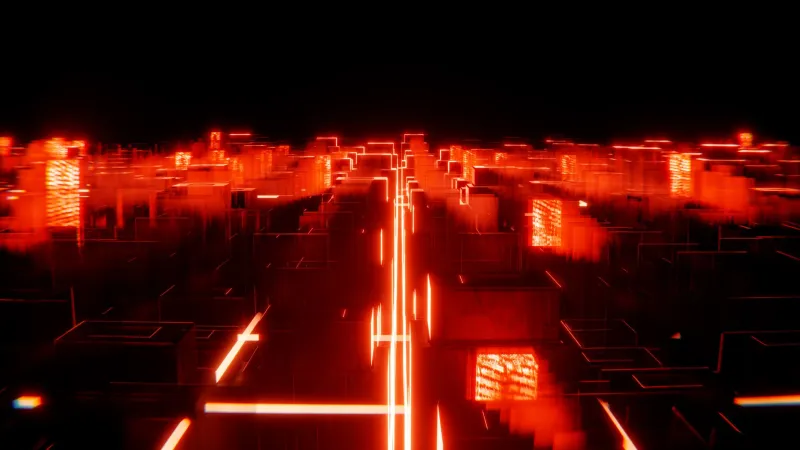
The neon-noir aesthetic that dominates so much contemporary game concept art — that particular marriage of darkness and saturated artificial light — has been bleeding into American cinema in ways that are becoming harder to ignore. Streaming platforms in particular seem to have developed an appetite for this look, commissioning productions that feel genuinely immersive in the way that the best open-world games do.
This isn't just stylistic cross-pollination. It represents a genuine shift in how American visual storytelling is being conceived and executed. When your pre-visualization team includes artists who spent years designing the emotional lighting logic of a fictional cyberpunk city, the films that emerge from that process carry a different kind of spatial intelligence.
What Comes Next
The pipeline between game studios and Hollywood art departments is only going to get more established. Several major film schools are already adjusting their curricula to incorporate game concept art as a legitimate precursor discipline. Art directors who came up through games are now mentoring the next wave of film-bound visual artists, creating a feedback loop that will continue to shape American cinema's aesthetic direction.
For the artists themselves, the transition represents something more personal — a kind of professional validation that's been a long time coming. The neon-soaked worlds they built inside game engines are now showing up on movie screens across the country, and audiences are responding to that visual intensity in real ways.
Game concept art isn't knocking on Hollywood's door anymore. It's already inside, rearranging the furniture — and leaving the lights on.