After Midnight, Before the World Wakes: America's Neon Street Photographers Are Chasing Something Real
After Midnight, Before the World Wakes: America's Neon Street Photographers Are Chasing Something Real
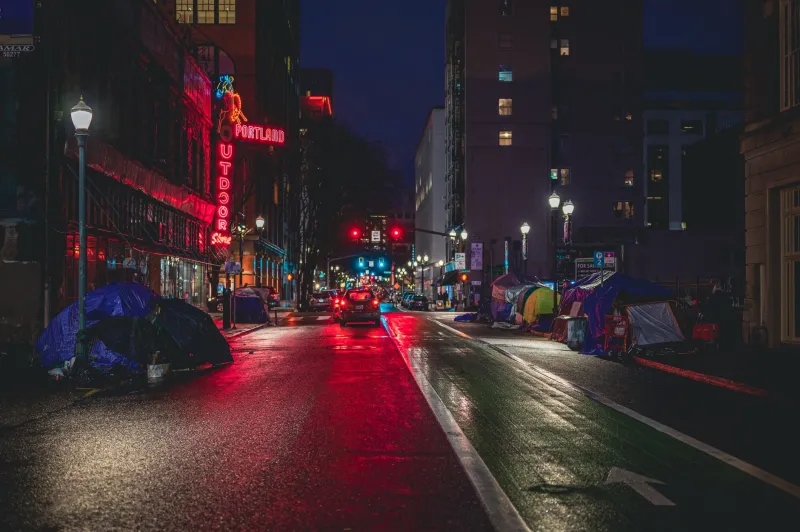
There's a specific kind of quiet that settles over an American city somewhere around 2 a.m. The bars have emptied, the delivery trucks haven't started yet, and the streets belong to nobody — except the signs. A Chinese restaurant's red and gold tubes still pulse on an empty block in Chicago. A motel vacancy sign in Albuquerque throws magenta light across a rain-slicked parking lot. A bowling alley marquee in Detroit blinks its slow, indifferent rhythm into the dark. Most people sleep through all of it. A small, dedicated community of photographers does not.
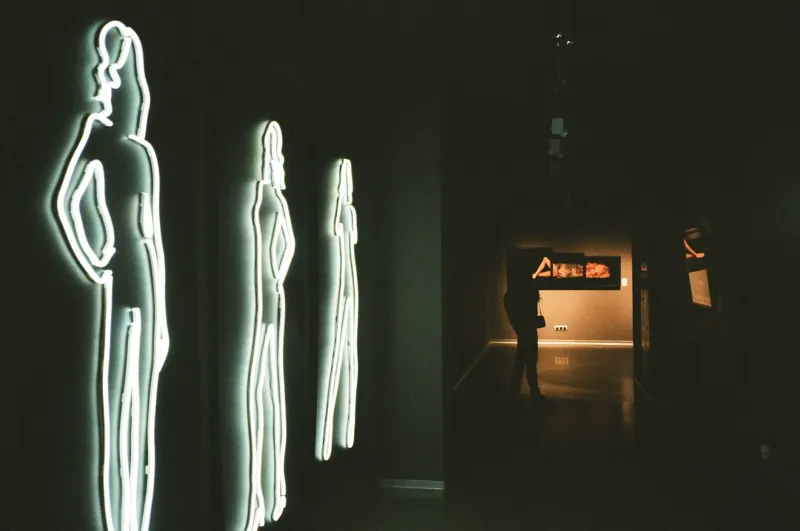
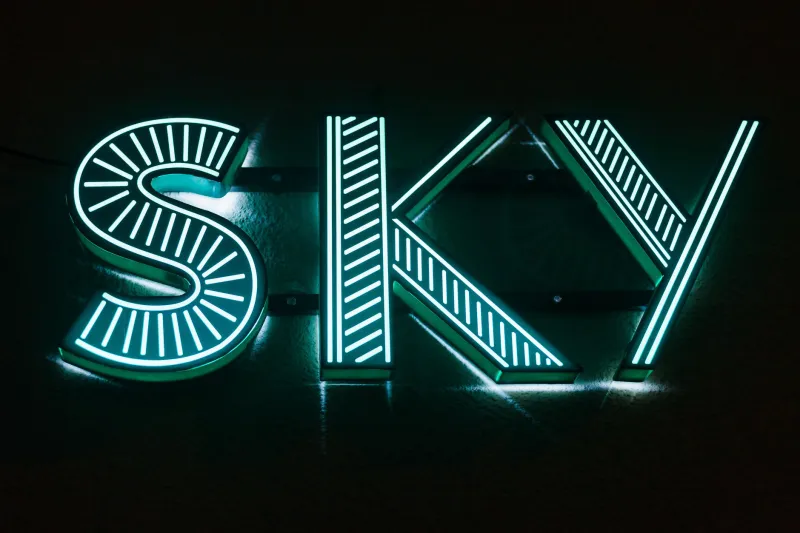
Across the country, a growing movement of night shooters is making a serious artistic and documentary case for the hours between midnight and sunrise as the most honest time to photograph America. Their images — drenched in neon color, framed by empty sidewalks and reflective pavement — are showing up on gallery walls, in editorial spreads, and all over digital spaces where visual culture gets made and remade. What they're building, one long exposure at a time, is something genuinely hard to categorize: part preservation project, part visual poetry, part love letter to a country that glows whether anyone's watching or not.
The Hour Nobody Owns
Ask any photographer in this world why they shoot at night and you'll hear some version of the same answer: the city finally stops performing.
"During the day, everything is competing for your attention," says Marcus Delray, a Houston-based photographer who's been shooting neon-lit streets for the better part of a decade. "Cars, people, noise, signage fighting signage. But at 3 a.m., a single neon sign becomes the whole composition. It does all the work."
Delray shoots primarily in Houston's older commercial corridors — the stretches of Westheimer and Navigation Boulevard where mid-century signage still survives alongside newer LED installations. His signature move is positioning himself low to the ground after rain, letting puddles and wet concrete double the light source and turn a single storefront into something almost symmetrical, almost surreal. His Instagram following has grown steadily over the past three years, but he's more interested in the prints. "I want these images to exist physically," he says. "The signs themselves won't."
That tension — between the ephemeral nature of neon culture and the permanence of a well-made photograph — sits at the center of what this community is doing.
Reading the Light
Technique matters enormously in this kind of work, and the photographers doing it best have developed highly personal approaches to a genuinely difficult medium.
In Portland, Oregon, Yuki Tanaka works almost exclusively with a medium-format digital system, prioritizing image resolution over mobility. Her process is slow and deliberate — she scouts locations during the day, returns after midnight, and often spends forty minutes or more working a single block before moving on. The results are images of extraordinary detail: you can read the texture of weathered paint behind a neon tube, count the dead flies inside a plastic sign housing, see the faint reflection of the sign in a shop window three storefronts down.
"I'm interested in neon as an artifact," Tanaka explains. "These signs were made by hand. Someone bent that glass. Someone designed that typeface. When I photograph them at maximum detail, I'm trying to honor that labor."
Her ongoing series Open All Night documents Portland's remaining neon signage in the context of the city's rapid commercial transformation. Several of the signs she's photographed in the past two years have since been removed or replaced with LED panels. The images are now the only high-fidelity record of those objects.
On the opposite end of the gear spectrum is Jerome Castillo, who shoots exclusively on 35mm film in Los Angeles. His camera of choice is a battered Nikon FM2, loaded usually with Kodak Portra 400 or, when he wants something grainier and more volatile, expired stock he sources from camera fairs. The unpredictability of film — the slight color shifts, the grain, the occasional light leak — is, for Castillo, the whole point.
"Digital is perfect and neon isn't," he says. "Neon buzzes and flickers. It has bad nights. Film gets that."
Castillo's work focuses on the stretch of Sunset Boulevard and the older commercial blocks of East LA, where Korean, Mexican, and Filipino-owned businesses have maintained neon signage as a form of cultural identity and neighborhood legibility. His photographs function as both art objects and community documents.
What Neon Remembers
There's a preservation argument running underneath all of this, and the photographers in this space are aware of it — sometimes uncomfortably so.
The United States has been losing neon signage at an accelerating rate for decades. The combination of LED's lower operating costs, stricter municipal sign codes in many cities, and the simple aging-out of the craftspeople who made and maintained neon tubes has created a slow-motion disappearance of a distinctly American visual tradition. What's being lost isn't just aesthetic — it's historical. These signs mark the commercial geography of immigrant communities, working-class neighborhoods, and regional identities that often don't make it into official archives.
In Memphis, photographer Dana Whitfield has been building what she calls a "visual census" of neon signage in the city's South Memphis and Whitehaven neighborhoods — areas with deep ties to Black American commercial and musical history. Many of the signs she documents are original to the 1950s and 60s, maintained by family-owned businesses that have operated continuously for generations.
"These signs are not just decorations," Whitfield says. "They're statements of presence. They say 'we're here, we're open, we're not going anywhere.' When I photograph them, I want that weight to come through."
Her images are deliberately warm, shot during the earliest part of the night when some foot traffic still exists — a deliberate choice to keep human presence in the frame. "I don't want to make these neighborhoods look empty," she explains. "They're not empty. I just happen to be there when it's quiet."
Building a New Visual Language
Beyond the documentary work, something aesthetically new is emerging from this community — a photographic style that's influencing graphic design, digital illustration, and even film production design in ways that are becoming hard to ignore.
The combination of long exposure, neon color theory, wet-surface reflection, and urban geometry that these photographers have developed is showing up in album artwork, brand campaigns, and the visual language of streaming content. It's a style that feels simultaneously nostalgic and futuristic — which, when you think about it, is exactly what neon has always been.
"Neon was the future once," says Marcus Delray. "And somehow it still looks like the future. I don't totally understand it, but I'm not going to question it. I'm just going to keep shooting."
That's the thing about this community — they're not particularly interested in theorizing their way through what they do. They're up at 2 a.m. with cameras in their hands, standing in the middle of empty streets, watching light do things that light only does when nobody's around to see it. Except them. And now, through their work, us.
The glow is still out there. Someone's always chasing it.