When the Machine Learns to Glow: AI, Neon Imagery, and the Artists Caught in the Middle
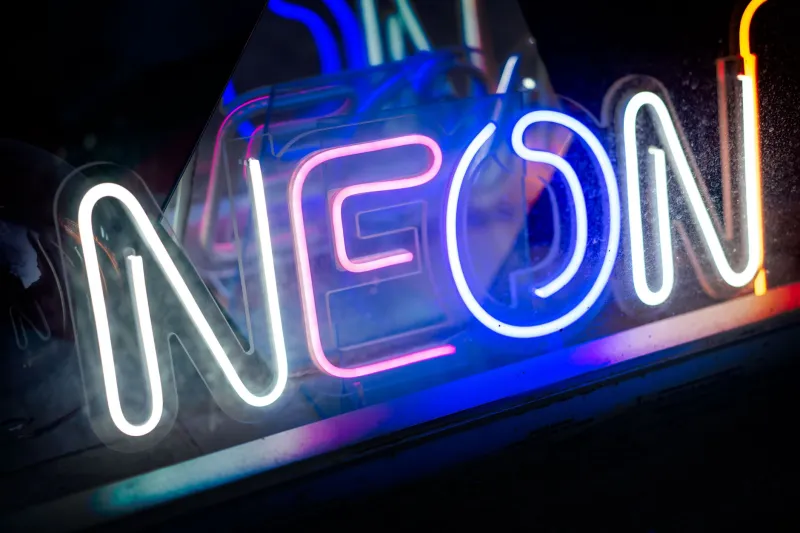
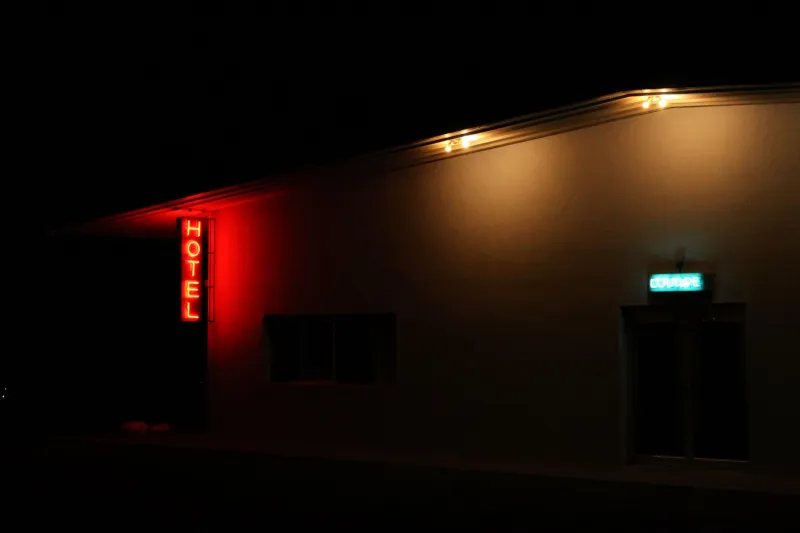
Feed an image generator the right prompts — "neon-lit alley," "cyberpunk storefront," "glowing tube signage, 1980s Las Vegas" — and what comes back is often stunning. Vivid. Detailed. Eerily accurate in its rendering of light behavior, color bloom, and the soft haze that real neon casts on wet pavement. The machine has been paying attention.
That's either thrilling or deeply unsettling, depending on who you ask. And right now, in the neon art and design community, people are asking loudly.
What the Algorithms Actually Learned
To understand what's happening, it helps to know what AI image models are actually ingesting. The large multimodal models powering tools like Midjourney, Stable Diffusion, and Adobe Firefly were trained on massive datasets scraped from the internet — billions of images, including decades' worth of neon photography, sign design archives, retro-futurist illustration, and digital art tagged with neon-adjacent keywords.
The result is a model that doesn't just know what neon looks like. It understands neon's grammar — the way colors interact when tubes are layered, the characteristic glow falloff on surrounding surfaces, the slight flicker implied by certain saturation choices. When you ask it to generate neon, it synthesizes patterns from thousands of human-made images to produce something that reads as authentic.
For designers and commercial clients who need quick concept visuals, this is genuinely useful. Brand agencies are already using AI-generated neon mockups to pitch clients before committing to the expense of physical fabrication. Event designers are using generated environments to visualize installations before a single tube is bent. The efficiency gains are real.
The Artists Who Built the Aesthetic Have Questions
But spend time talking to the human artists who have spent years developing neon as a fine art medium and the conversation gets more layered.
New York-based neon sculptor Petra Marsh has been bending glass and working with argon and neon gas for over a decade. Her large-scale installations have appeared in galleries from Chelsea to Chicago's River North district. When she first started seeing AI-generated neon work circulating on design platforms, her reaction was complicated.
"My first thought was honestly — okay, some of that looks good," she admits. "And then immediately after that I thought: where did it learn that? Because some of those compositions, those color relationships — those are things I've spent years figuring out through physical experimentation. Through burns and broken tubes and failed mixes. The machine learned from human failure and human discovery, and now it's generating outputs that skip all of that."
The question of training data attribution is one the broader AI-art discourse has been wrestling with for a couple of years now. In the neon community specifically, it's sharpened by the fact that neon as a fine art form has only recently earned serious institutional recognition. Artists worry that a flood of AI-generated neon imagery could dilute the perceived value of the real thing — or worse, blur the line between machine output and human craft in ways that hurt emerging artists trying to establish careers.
The Trend Prediction Machine
Beyond image generation, AI is also being deployed in more subtle ways that affect neon culture. Several design analytics platforms now use machine learning models trained on social media engagement data to predict aesthetic trends — including shifts in color palettes, typography styles, and lighting aesthetics.
One such platform, used by commercial sign shops and experiential design firms across the US, reportedly flagged a coming resurgence of warm amber and deep violet neon combinations about six months before those colors started dominating festival and retail installations in 2023. Whether the model predicted the trend or helped accelerate it by surfacing it to designers is a genuinely tricky epistemological question.
"There's a feedback loop happening that nobody fully understands yet," says design researcher and critic Yusuf Adeyemi, who has been tracking AI's influence on visual culture for the past three years. "The model learns from human creative output. It generates predictions. Designers see those predictions and act on them. That behavior becomes new training data. At some point you have to ask: is the trend emerging organically from culture, or is the algorithm nudging culture toward its own predictions?"
Virtual Neon and the New Design Frontier
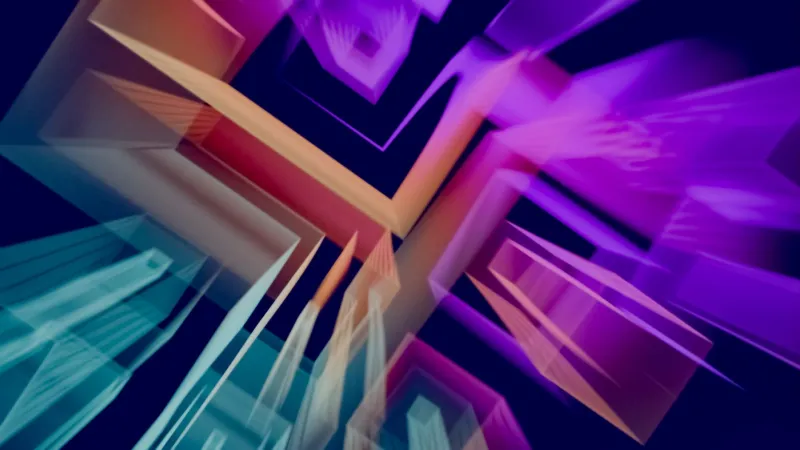
Separate from the controversy, there's a genuinely exciting frontier opening up in AI-assisted virtual neon environments. Game designers, virtual reality developers, and digital artists are using AI tools to build neon-lit worlds at a scale and complexity that would be impossible to design manually.
Some of the most visually arresting virtual environments being produced right now — immersive VR experiences, AI-generated animated cityscapes, interactive digital installations — lean heavily on neon aesthetics rendered through machine learning pipelines. These aren't knockoffs of physical neon; they're something new, exploiting the medium's visual language to build spaces that couldn't exist in the physical world.
Los Angeles-based digital artist collective Chromaveil has been experimenting with AI-generated neon environments as the basis for live visual performances. "We're not trying to simulate real neon," says collective member Sasha Okonkwo. "We're using the AI to extrapolate neon into impossible geometries, impossible scales. It's a different conversation with the aesthetic entirely."
Where Does That Leave the Human Artists?
The honest answer is: in a complicated but not hopeless position. The artists most likely to be disrupted by AI neon generation are those producing commercial work at the lower end of the market — quick logo designs, standard sign concepts, basic environmental mockups. For that kind of work, AI tools are already competitive on speed and cost.
But the artists operating at the intersection of concept, craft, and cultural meaning are finding that the machine can't replicate what they bring. The physical presence of a real neon installation — its heat, its hum, its handmade imperfection — remains irreducibly human. The conceptual frameworks that make a neon sculpture mean something, rather than just look like something, aren't in the training data.
Petra Marsh puts it simply: "The AI can generate a beautiful image of neon. It cannot tell you why that neon is in that space, what it's asking of the person standing in front of it, what it costs to make and what that cost means. The story is still ours."
For now, at least, the most interesting neon work is happening in the tension between what the machine can produce and what only a human can make matter. That friction, uncomfortable as it is, might be exactly where the next genuinely new thing gets born.