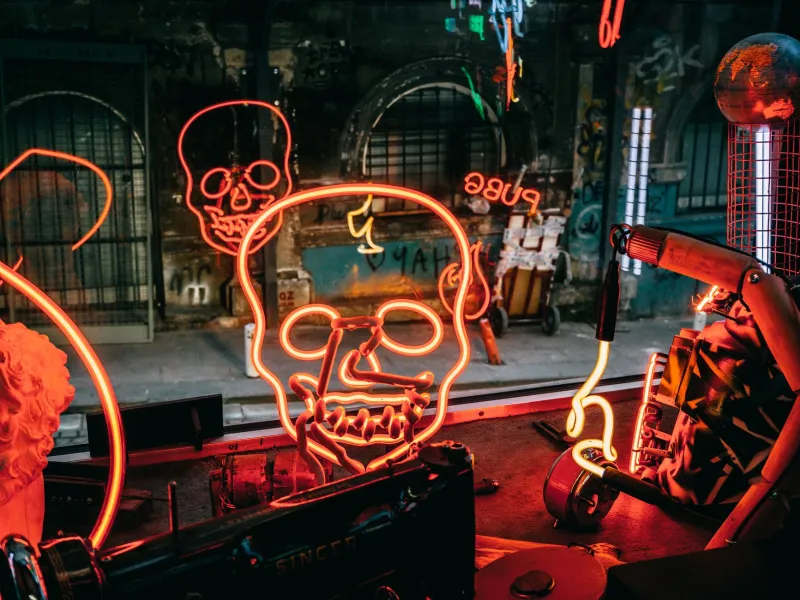
Plugged In: 10 US Digital Artists Turning Instagram Into a Neon-Lit Gallery
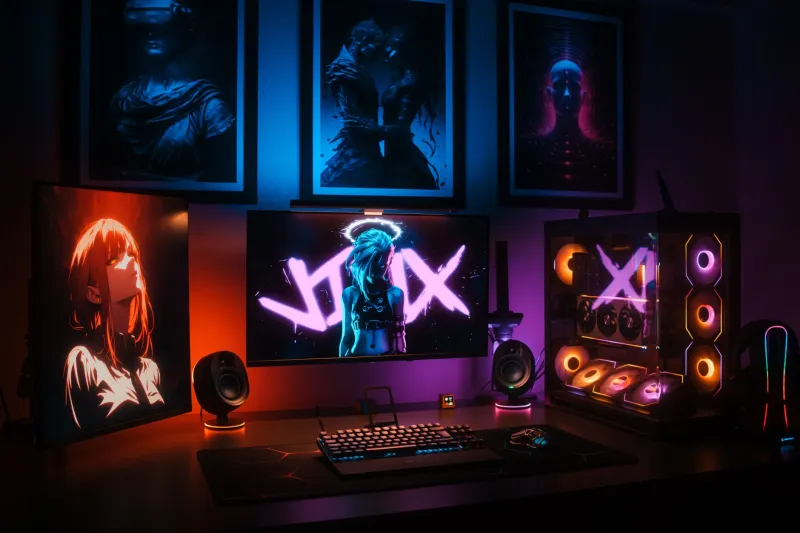
Scroll through Instagram for more than five minutes and you'll notice it: a certain kind of art that stops you cold. Glowing cityscapes that feel like memories of a city you've never visited. Portraits lit from within, like the subject is made of light. Surreal landscapes where the sky is the color of a Las Vegas casino at 2 a.m.
Neon-inspired digital art has become one of the defining visual languages of our moment, and the artists pushing it forward are doing genuinely boundary-breaking work. We dug deep to pull together ten US-based creators whose Instagram feeds are essential viewing for anyone who loves this aesthetic — from polished cyberpunk veterans to raw, experimental newcomers.
1. Zara Nightfield (@zaranightfield)
Style: Surreal neon portraiture with organic textures Tools: Procreate, Photoshop
Zara's work is immediately recognizable: faces that seem to be dissolving into light, skin rendered in gradients of violet and electric teal, hair that flows like fiber optic cables. Based in Los Angeles, she's built a following of over 300K by treating the human face as a canvas for emotional abstraction. Every piece feels like it's capturing a feeling rather than a person. Her use of Procreate brushes she's developed herself gives her portraits a painterly quality that separates them from the more hyper-rendered work flooding the space right now.
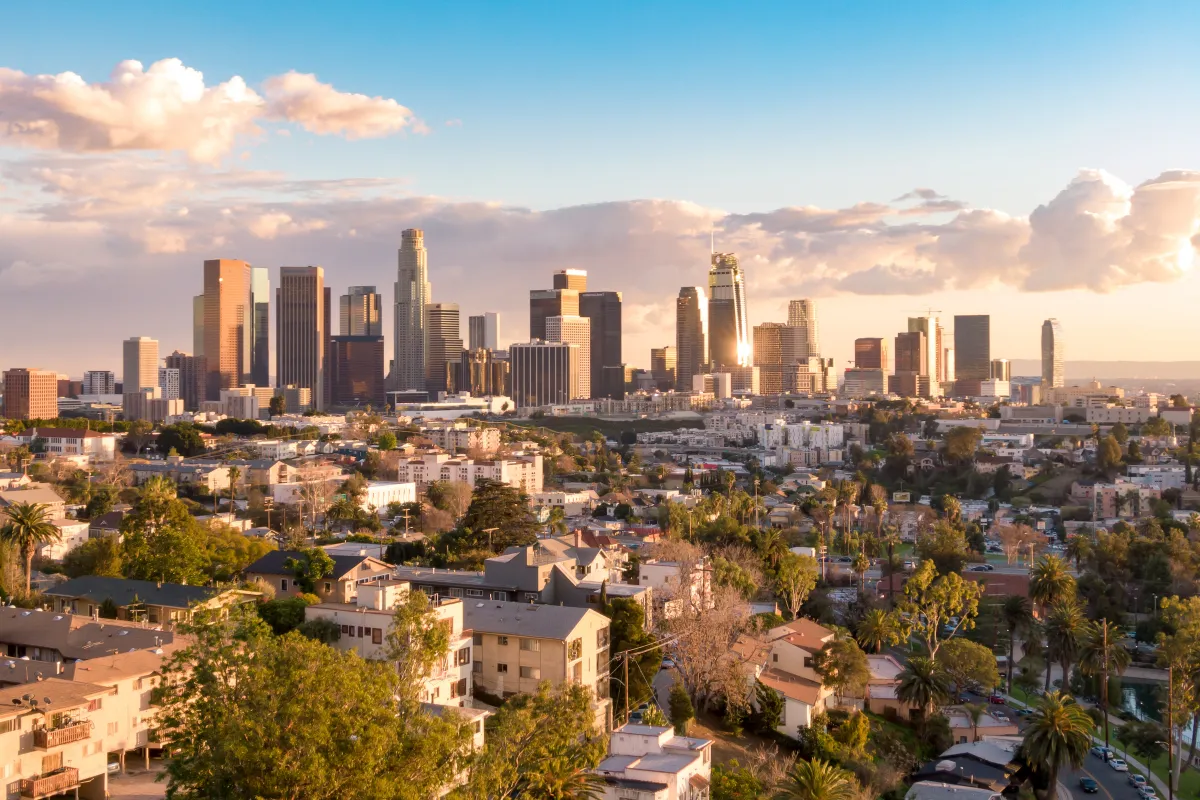 Photo: Los Angeles, via www.travelguide.net
2. Marcus Velo (@velocityframes)
Style: Cyberpunk urban environments and motion loops Tools: Blender, After Effects
If you've ever wanted to live inside a Blade Runner sequel set in Chicago, Marcus's page is your destination. He builds entire city environments in Blender, populating them with rain-slicked streets, holographic advertisements, and the kind of moody atmospheric haze that makes everything look like it's happening at the exact right moment. His looping animations — often just five to ten seconds — are hypnotic in a way that makes you realize how much storytelling can happen in a single perfect cycle.
3. Priya Osei (@priyaosei.creates)
Style: Afrofuturist neon mythology Tools: Procreate, Midjourney (for concept development)
Priya, based in Atlanta, is doing something that feels genuinely singular: pulling from West African visual traditions and mythological imagery and running them through an electric neon filter. Her figures are regal, adorned with glowing jewelry and ceremonial garments rendered in hot pink and gold. She uses AI tools like Midjourney in her early concept phases but does all final rendering by hand digitally. The result is work that feels both ancient and aggressively futuristic.
4. Cole Driftwood (@cole.driftwood)
Style: Lo-fi neon landscapes and retro-wave environments Tools: Procreate, Aseprite
Cole leans into pixel art in a way that most neon artists don't, and it pays off beautifully. His scenes — often small-town American settings reimagined with neon-soaked skies and glowing details — have this melancholy, nostalgic quality that hits hard. Think: a diner in the middle of nowhere, its sign reflected in a puddle, the whole scene lit in colors that don't exist in real life. Based in rural Oregon, Cole brings a distinctly non-urban perspective to an aesthetic that's usually associated with big cities.
5. Samantha "Flux" Rivera (@fluxsamantha)
Style: Generative neon abstractions Tools: TouchDesigner, custom Python scripts
Sam isn't making images in the traditional sense — she's writing code that generates them. Her TouchDesigner work produces flowing, neon-colored abstract forms that look like something between a plasma lamp and a living organism. She regularly posts both the finished pieces AND behind-the-scenes looks at the code generating them, which has earned her a particularly engaged audience of fellow creative technologists. Based in Brooklyn, she's also one of the few artists on this list creating work that's genuinely interactive in live performance settings.
6. Theo Brightwater (@theobright.art)
Style: Neon-drenched sci-fi character design Tools: ZBrush, Blender, Substance Painter
Theo's characters look like they stepped out of a video game you desperately want to play. He sculpts in ZBrush before bringing his creations into Blender for lighting and rendering, and his understanding of how neon light falls on different surface textures — metal, skin, fabric — is genuinely exceptional. His recent series imagining future versions of American folk heroes (a glowing, cybernetic Paul Bunyan; a neon-crowned Calamity Jane) went massively viral and landed him a feature in several digital art publications.
7. Lena Park (@lenapark.pixels)
Style: Quiet, intimate neon interiors Tools: Procreate, Cinema 4D
While a lot of neon art goes big and bombastic, Lena's work is intimate and almost tender. She paints small moments — a bedroom window glowing from inside, a late-night convenience store, two people at a neon-lit bar — with a warmth that makes the electric colors feel cozy rather than aggressive. Based in Seattle, her aesthetic has been described as "neon cottagecore," which sounds contradictory but makes complete sense once you see it. Her Cinema 4D interiors have an architectural precision that grounds the more painterly elements beautifully.
8. Devon "Static" Mills (@static.dev)
Style: Glitch art meets neon maximalism Tools: Photoshop, custom glitch software, AI upscaling
Devon embraces visual chaos in a way that feels intentional and controlled even when it looks completely unhinged. His work combines neon color palettes with heavy glitch effects — fragmented images, data corruption aesthetics, layered text artifacts — to create pieces that feel like transmissions from a broken future. He's been experimenting heavily with AI upscaling tools to push his compositions to massive resolutions, which gives his chaotic imagery an unexpected sharpness up close.
9. Nia Solaris (@niasolaris)
Style: Botanical neon — plants, nature, and electric light Tools: Procreate, Stable Diffusion (for texture experiments)
Nia's feed is unlike anything else in this space: she takes botanical illustration as her starting point and then electrifies it, literally. Flowers with glowing petals. Forests where the bioluminescence has been cranked up to eleven. Underwater scenes where every creature pulses with neon light. Based in Miami, she cites the natural light of South Florida as a major influence — that specific quality of late-afternoon sun that turns everything golden and strange. Her hybrid workflow using Stable Diffusion for texture experimentation alongside hand-drawn Procreate work is genuinely innovative.
10. Ray Voltaire (@rayvoltaire.digital)
Style: Large-scale neon typography and environmental design Tools: Illustrator, Blender, Unreal Engine
Ray approaches digital art from a graphic design background, and it shows in the cleanest possible way. His work focuses on typography and environmental design — imagining what signage, wayfinding, and public art could look like in a neon-saturated near future. He builds many of his environments in Unreal Engine, giving them a real-time rendered quality that's increasingly rare in still digital art. His series imagining neon-redesigned versions of American landmarks — the Hollywood sign, the St. Louis Arch, the NYC skyline — has become one of the most shared series in the neon art community this year.
Why These Artists Matter
What ties all ten of these creators together isn't just a shared color palette or aesthetic sensibility — it's a genuine commitment to pushing what neon-inspired art can do and say. They're not just reproducing a retro look. They're using it as a language to talk about identity, technology, nature, nostalgia, and the strange, beautiful anxiety of living in 2025.
Follow them all. Your algorithm will thank you.